





About Refugees, By Refugees
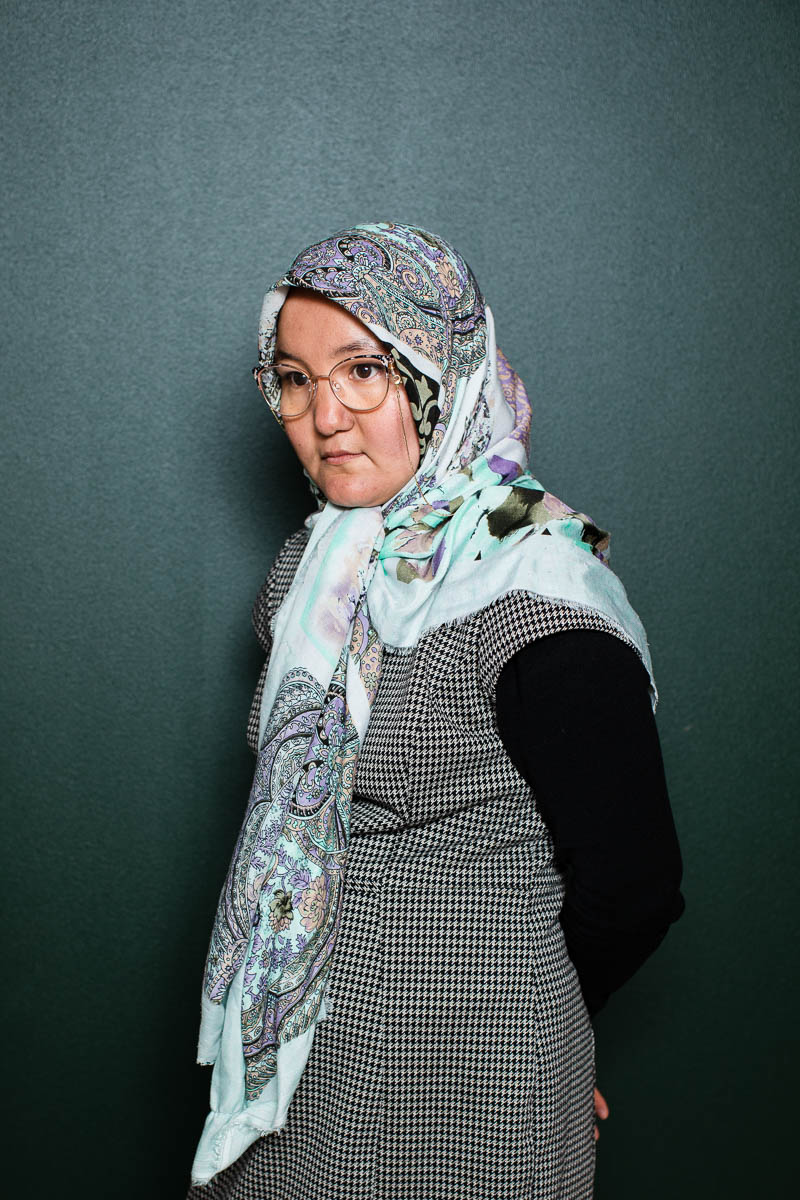
Gohar Madar
Pictures taken in:
From:
Nationality:
Photo and interview by:
“My dream is to study and, with the help of knowledge, have a reputable job and serve my country, Sweden,” says Gohar Madar (pseud, 22), who was born in Iran to Afghan refugee parents. Despite being born in Iran, she says she was never granted rights or acceptance: “I didn’t have any rights. They didn’t let me have my rights.” Facing discrimination and limited opportunities, her family sought aid from the UN after her father fell ill. Eventually, they were resettled in Sweden. Now, Gohar lives in an apartment with her family, and spends her days attending school and going to the gym. She says she cherishes the kindness of Swedish people: “When I ask for an address, they answer with sincere humanity.” However, she regrets lost years in Iran, and feels behind in education, especially in English. Yet, she finds strength in her social connections and adaptability. Above all, her happiness is tied to her family’s well-being: “If my mother and sisters are happy, I am happy.”
full interview
The first question, in what kind of house do you live?
I live in an apartment.
Who do you live with?
I live with my family.
How do you spend your time here?
On the weekdays, I go to school. If I don’t go to school, I go to the gym. In my free time, I meet my friends and talk about our country and the problems of my country. As well as we talk about the restrictions of the Taliban on women.
What makes you happy?
I see my happiness in my family’s happiness. If my mother and sisters are happy, I am happy.
Since you have come to Europe, what have been the problems of life here?
It has been one and a half years that I have been living here. Thank God. I haven’t faced any problems. I hope it will be like this without problems.
What have been the good points here?
When I talk to people here, they listen to me patiently. When I ask for an address, they answer with sincere humanity. My friends from school and other Swedish people treat me so well.
Could you explain what you feel about living here?
I have a good feeling. When I see them, they treat us so well. It makes me so happy. People have freedom.
You live with your family here. Thankfully you are not far from your family. You don’t belong to this country. How do you feel about it?
They have nice behaviors that I don’t feel I am a foreigner. It’s different from when I was in Iran. When I was in Iran, I went to school and had a job. They contrasted about why an Afghan refugee has a job. Their behaviors were full of stereotypes. I was born in Iran. My parents went to Iran during the king’s (Shah’s) era. They had lived there for about 40 to 50 years, but we were always Afghan refugees.
Have you ever thought about overcoming those problems? And you had to adapt to the European life rhythm? Even you had problems in Iran. You were born in Iran. You were not a refugee there. However, you had problems and you explained. Have you thought you could solve the problems?
I was born in Iran, but I didn’t have any rights. They didn’t let me have my rights. And the Afghan refugees can’t have them as well.
The next question. What was your strength to deal with obstacles?
With all my problems. My strength is my social connection with people. Europe supports the people with their social department. I think my strength is my social connection with people.
How has COVID-19 affected your life?
When we arrived in Europe, COVID-19 was at its highest peak. Our classes were online. I didn’t understand the lessons well. Thank God, now that COVID-19 has finished, and the classes are in-person now, the situation is better now.
Excellent! Some questions will be about the past. As I explained it before. If you don’t like to answer a question, skip it. What happened when you left Iran? What happened?
My late father was sick, and we needed money to cure him, and we asked the United Nations for aid. Unfortunately, my father passed away. They asked us if we wanted to leave Iran and go to Europe. After six years, we could come to Europe.
How was your feeling when you arrived in Europe?
I had a very nice feeling because I could start my lessons and have a job and serve my country.
You said that you could come to Europe through the United Nations. Was there an experience from the trip you had to Europe that you want to talk about?
No.
You talked about the problems in Iran. Do you still think about the problems you had in Iran? If you think about them, what do you feel?
Yes, I do. I regret that my life was wasted in Iran. I couldn’t study and progress. Most of the people from other countries know English. But we don’t because we have come from Iran. It is a big problem.
Do those problems still affect your life? Like, you talked about the English language. Is there anything else that affects your life?
Yes. I can say yes.
Have you ever thought that you could overcome the obstacles?
Yes.
From where do you receive support and strength before you came to Europe?
My family supports me. I receive support from my family.
(Speaking in Swedish) Sorry, we have to leave this place. I spoke in Swedish. The last questions. Before you leave Iran, what was your dream? When you lived in Iran, what was your dream?
My dream was to study in Iran, have a job and a reputable life.
When you were coming to Europe, what was your dream? Please answer that my dream was.
My dream was to come to Europe, study and improve.
The last questions. You talked about your strength and said that your family was your strength. Thank God, still you have your strength.
Yes.
Have those problems made you improve?
Yes, they have. I have learned to be more social and solve my problems.
What are your dreams now? Please, answer with this phrase that my dream is this.
My dream is to study and with the help of knowledge, have a reputable job and serve my country Sweden.
Thank you for your answers. In the end, do you want to add something that the Europeans know the life of refugees better?
I just want to add that the refugees are not those people that you think of. Europeans know the refugees and listen to them. I heard that the Europeans said that all the refugees are offenders. It is not right. First, listen to the refugees. Then decide about them.
Thank you.
You are welcome.
Many 1000 Dreams interviews were not conducted in English. Their translation has not always been performed by professional translators. Despite great efforts to ensure accuracy, there may be errors.