





About Refugees, By Refugees
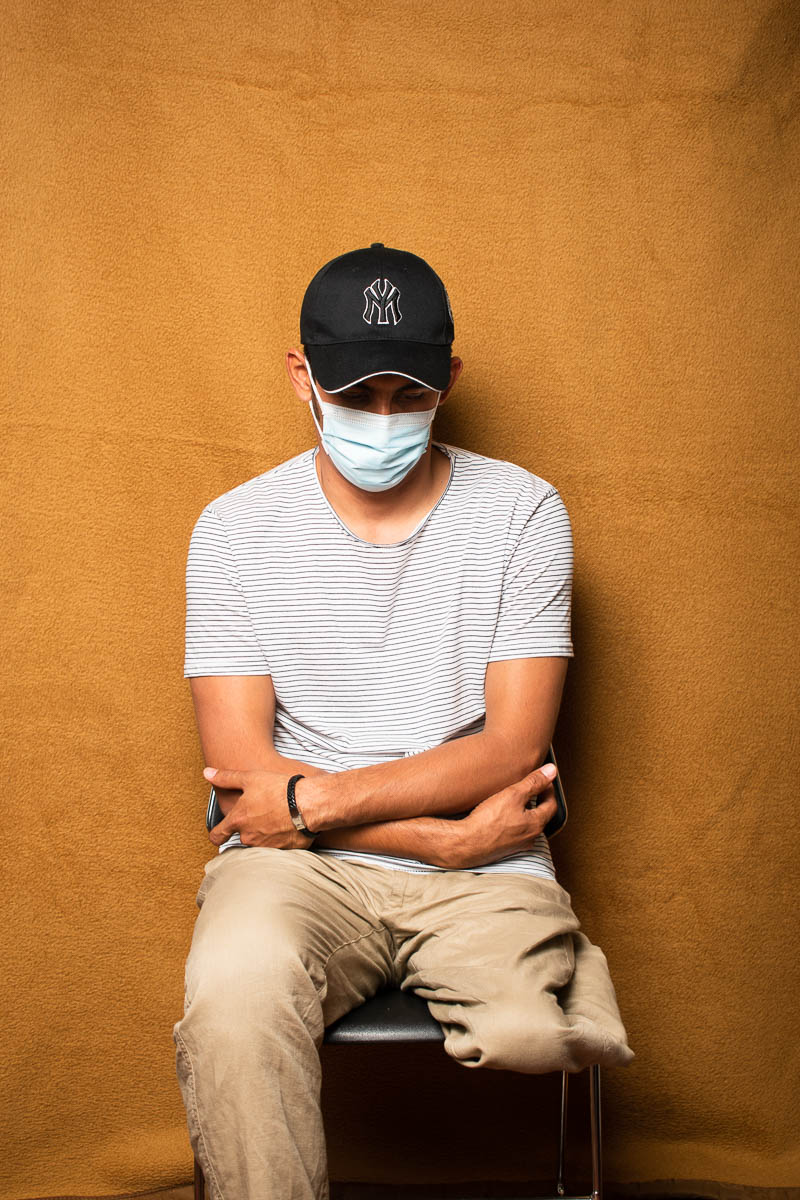
Yusef
Pictures taken in:
From:
Nationality:
Photo and interview by:
Born and raised in Iran, the athletic and studious Yusef X (28) is a cancer survivor who emigrated to Greece via Afghanistan. In danger in his home country, oth his journey and the asylum process brought additional challenges. On the trip to Lesbos Island, for instance, he says, “the Turkish Coast Guard caught us, threw all our belongings in the water and beat us.” These experiences cause Yusef recurrent trauma to the point of considering self-harm: “I lose my motivation to continue in life when I remember those events.” After completing the asylum process, however, he senses improvement. He says, “I feel that my strengths have increased both personality and motivation wise.” Now, despite the amputation of one leg during cancer treatment, Yusef continues to have his academic and athletic goals, naming volleyball, basketball, swimming and martial arts among the activities he’d like to pursue again. Now he focuses on how “to progress in the life ahead of me.”
full interview
As I’ve explained the project to you, you can ask me anytime you did not understand the question. You can skip questions, if you are not comfortable sharing an answer for, whenever you feel like you need a break just let me know. Can you introduce yourself?
Yes.
With the name you want to be called.
Sure, I will introduce myself under my pseudonym. I am Yusuf.
Can you explain more about yourself? How long have been you in Greece?
Yes. I am twenty-eight years old. I was in Lesbos Island for about a year and 8 months.
You entered Greece in 2020?
No. I came here in 2019.
Late 2019?
Yes. It was late-November when I entered Lesbos, Greece.
Has your residency been approved?
Yes, it has. I got my residency approval in August, oh sorry, in July 2020.
Are your residency documents complete?
Yes, they are.
Where do you live?
I was in Lesbos Island for about a year and eight months. And now it’s been around a week, I am in Athens.
Where do you live now? Before you were in the camp. Now in Athens, where do you reside?
I live at my friend’s house.
How is the condition?
Not really good.
Do you travel alone?
Yes, I do.
How do you spend your time? Do you have a job?
I follow a simple routine like reading books and news and listening to music. And personal chores such as washing my clothes and cooking.
So you attend to language classes?
No. Back when I lived on the island, there were no language classes because of COVID-19, but I found and attended some online classes instead.
What makes you happy and enjoy life?
Well, the thing that makes me happy is my fate and belief in life and my purpose of wanting to progress in the life ahead of me. That’s why I’m so happy and it keeps me alive.
How has been your life, since you entered Europe? What has been good? What are the difficulties? Can you explain?
My life since I arrived in Europe… I can say that… if I were to compare myself to the past, I can say that my personality has changed a lot. I feel that my strengths has increased both personality and motivation wise, and when I compared to these in the past, I can say that they were far and few.
How about the problems?
It is natural to face problems as a refugee entering a new country. I had problems, like any refugee. But the problems were more for me, considering my physical problems.
Could you explain about your physical conditions and problem? Or would you like to skip and move on ?
I have one of my legs amputated and because of this, so the problems were more pronounced for me.
Have you been like this since the beginning, or did you lose your leg in any accident?
I had cancer and I lost my leg due to this cancer. I say that I had problems in my previous life, and because of immigration and asylum, these problems increased.
How do you feel about your life in Greece?
To be honest, I’ve never thought about this. I don’t know now because I didn’t think about it. I feel… I don’t feel bad or good.
Since you mentioned that you travel alone, could talk about how you said goodbye to your family and got separated from them?
This was one of the great lessons that life gave me. Immigration taught me how to tolerate being away from my family, and despite all the problems I faced here, being away from my family was the biggest problem for me. I have never had a long trip away from my family, and that’s it.
Have you ever thought that you have been in a situation like this, handle it and overcome the obstacles?
No, I have never thought that I would be in a refugee and even more so that I could overcome the problems.
Did you think that the challenges and problems you faced led to the growth of your strengths and skills?
Yes, I did. As I said, I found strength within myself. One clear example would be my separation from my family and immigration challenges that I overcame.
How did Covid-19 affect your daily life, feelings and emotions?
(laughs) Covid-19 paralyzed the life of people all around of the world. I do think that refugees were even more affected by it. For example, refugees used to go to language classes and these classes were closed. Some classes were able to continue online, but some could not. I myself was in one of these Greek language classes, but Covid-19 spread more, and the whole world went into quarantine, so my classes were shut down. I had no classes for a very long period until I was able to find online classes to continue.
Now I will ask questions about your past. Why did you leave your country? Can you explain what happened?
I would like to not answer this question, if possible. Because I feel bad, so I prefer not to answer. If I want to say generally. I left this country because my life was in danger and I could not continue my life there.
How did you feel when that happened to you? The incident that forced you to leave your country.
I felt very bad when things happened. I even wanted to commit suicide. But I did not dare do it.
How was your trip to Europe? Can you talk about the difficulties en route? And if anything bad happened to you on the way?
Our journey was full of challenges. Yes, some things happened to me on the way, but what matters is we passed it.
OK. Is there anything you want to say about it? Did anything happen to you on the boat when you were coming from Turkey towards the island?
Yes, it did.
What happened?
When we wanted to come to Lesbos Island from Turkey, the Turkish Coast Guard caught us, threw all our belongings in the water and beat us. Our boat did not stop, and they did everything to prevent us from entering Greek and international waters. I was also beaten even though I was a nobody, I was just a traveller who wanted to come to Greece from Turkey.
When you were on your way and these things happened to you, how did you feel when the police beat you and threw your belongings over board?
I felt bad, but I didn’t think about or care for it all, and I knew it would pass quickly. I was in my own world and thought about what had happened to me in Afghanistan and the problems I faced there. I still remember the events that happened to me in Afghanistan, but I try to resist.
Even the events that happened on the way could not clear your mind from the previous events. Did you think more about what happened before that?
Yes.
Did you not notice what was happening around you?
I could understand that things happened, but they were temporary.
I mean, the biggest pressure was from what happened to you in Afghanistan?
Yes. But things happened along the way because I was busy with the events that happened to me in Afghanistan, my mind was very busy, and I did not feel well at all. Later, when I remembered that these things happened to me on the road, I was surprised that I passed them so easily.
How often do you think about the things that happened to you on the way?
These thoughts come to me every time.
Let me ask like this, what happens when you think about those events?
Whenever I’m alone.
Loneliness?
Yes. When I have a class and or when I exercise, their memories don’t come to my mind. Those thoughts come to me when I have nothing to do and am alone.
When you remember those memories, how do you feel?
A very bad feeling. Because I like to be alone all the time and I don’t like to go to a group of people. It affects my will. My motivation to progress in life decreases. It affects many issues in my life.
What effect has the situation you faced on your life?
The situation that happened to me in the past?
Yes. All the events that happened to you before your trip and during your trip, how have they affected you and your personality now?
I said that whenever I’m alone, and I remember those events, my life gets disrupted, I mean I find it difficult to think and concentrate. I can’t concentrate on doing one thing. I lose my motivation to continue in life when I remember those events, both the past events and the events along the way, as well as the events that happened here.
Was it a bad or good effect?
Bad effect.
Did you imagine that you would be in such a situation and be able to manage it?
No. I never thought that I would be in the such a situation and what I would do.
How did you manage to cope with it? I mean, what did you do? What technique did you use to forget the bitter memories?
I try to keep myself busy with language classes, sports and reading books. Although, as I mentioned, I cannot focus on anything. I try to entertain and keep myself buys with these hobbies.
(Someone’s Siri is talking) …
Can’t you find a place that can support you? Emotional support?
Do you mean mental support?
Yes.
No.
What were your dream for the future before the events that forced you to leave your country and home? Start with the statement that it was my dream that.
Before I migrated?
Before the incidents happened.
Right.. Before I migrated, I wanted to continue my education. Whether it was in Iran or in my own country, Afghanistan, and through my education, I can find a suitable job related to my field of study and live that way. I also had dreams. I used to do sports in Iran. My dream was to be a member of a national team in fields such as volleyball, basketball, swimming or martial arts. I had these dreams along with continuing my education and having an independent life for myself.
When you left your home, what was your dream in the future?
I had the same dreams that I mentioned. I left Iran for Afghanistan, my whole dream was to be able to continue my education in my own country and find a suitable job in my own country and build a progressive and independent life for myself. I also had the dream to continue playing sports, volleyball or basketball because I think I had the talent for it.
Were you born and raised in Iran?
Yes.
Did you return to your home country?
Yes.
What abilities did you have before you left your country and home?
Before leaving Iran and Afghanistan, I was a student and studying. My ability was that I was a student and I wanted to continue my education and continue my education until the doctorate level and have a life and a job suitable for me.
You mentioned that you used to swim, play basketball and volleyball.
Yes.
These were your abilities.
Yup. They were some of my abilities. I have both talent and great interest in these fields.
Have you maintained your abilities?
Yes. With the same situation I had on the island, I built a basketball court in the refugee camp at Karatpe, Lesbos, and sometimes I would go and practise for myself.
Ah, okay.
Even going to the camp was very difficult. It was very difficult to get in and out of the camp, which made me not go some days.
Did you live outside the camp? You mean you didn’t live in the camp?
I lived in the camp initially, but I was transferred to the city of Mytilene because of my condition.
Okay. Did you go to the camp for exercise?
Yes.
At the time of the fire in Moria, were you inside the camp or outside?
No… As far as I remember, I was not in the camp. I was transferred to the city sometime before the fire.
Everything you said sounds really hard. Do you think that these hardships have made you grow?
Yes, I think I have grown as a person. As far as I know, I think I have grown personality wise.
Now that you are here, what are your dreams for the future? Start by saying that this is my dream.
The same dreams and the same goals I had before. I have the same ones now. That is, I would like to work in one of the sports fields that I mentioned earlier and even be a member of the national team. And to continue my studies in the same field that I had in Iran, and I wanted to continue in Afghanistan as well.
What field did you study?
Geography and urban planning.
Thank you. I am done with questions. If you have any words that you want to add that to help the people of Europe to better understand the living conditions of refugees in Greece, please let them know.
Honestly, I had not thought about this question before. I hope that the living conditions of the refugees in Greece will improve and that facilities will be provided to them so that the immigrants can live the life they want. What I mean by the possibilities is that they hold a language class for them, English and Greek language classes. There are skill classes that every refugee wants to study such as painting, design, specialized through that specialization, they can build a suitable and dignified life for themselves. I hope that these requests will be fulfilled. I hope that when a refugee is mentioned in Greece, it is an expert and literate refugee. I mean that every refugee and immigrant should be able to speak for themselves. We hear that in other European countries, services are provided to refugees, and they use them, and in other European countries, they have something to offer in their fields of study, sports, or work, and there are many great people among them. Maybe there are very few refugees who have a good life in Greece, but this is not the case in general. I would like refugees to have a good life in Greece like the rest of the country.
Thank you.
You are welcome.
Many 1000 Dreams interviews were not conducted in English. Their translation has not always been performed by professional translators. Despite great efforts to ensure accuracy, there may be errors.