


About Refugees, By Refugees
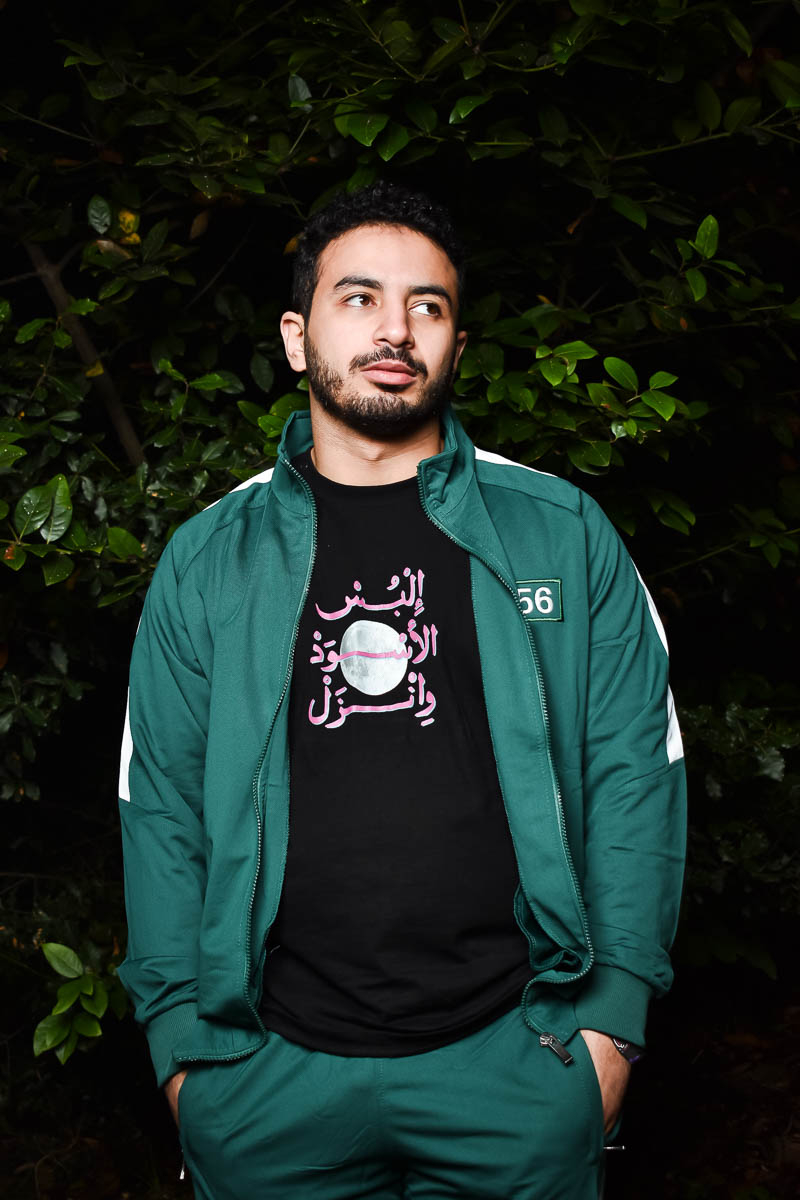
Musa Geceoglu
Pictures taken in:
From:
Nationality:
Photo and interview by:
“I kept hearing a song with lyrics like: ‘I travel and leave you to whom? You’re still a kid and your Nile is sad, and tomorrow you’ll be filled with longing.’” Musa (pseud, 26) was forced to flee Egypt to avoid being detained a third time. His first arrest was at around 15 years old, for protesting a military coup and ousting of the elected president. “The charges against me were being a member of the Muslim Brotherhood, vandalism, and assaulting police and army officers. But how could a 15-year-old child assault a police officer?” Politics have played a central role in Musa’s life from childhood through to his higher education–he now holds a degree in Political Science and Public Administration. “I wanted to understand…what the Muslim Brotherhood essentially means, who are they, and why there is governance in this way,” he shares. Currently confined to the state of Turkey under a humanitarian residency, he dreams of returning to Egypt.
full interview
Hello, I am Amal from the project named “Witness Change.” Musa, today I came to hear from you in order to convey a clearer picture of us as refugees to the European community. Tell me about yourself, Mohammed.
My name is Musa, a 26-year-old Egyptian youth. I hold a bachelor’s degree in Political Science and Public Administration from Al-Furat University, class of 2022. I live in Istanbul, and I work in public relations at a British academy.
What year did you come to Istanbul, Musa?
I came to Turkey in 2015.
What made you leave Egypt and come here?
The same reason that made you leave Syria and come here.
I want to hear your story.
Of course, I will tell you my story. I’ll go back in time to 2013. I come from a family that could be said to belong to the Muslim Brotherhood. In 2013, there was a military coup in Egypt, and the president who was in power at that time, and who belonged to the Muslim Brotherhood, was ousted. Since the family belonged to the Muslim Brotherhood, we were opposed to the military coup and to the ousting of the elected president at that time as well. We participated in protests to reject the military coup. Although I was still a young teenager, about 14 or 15 years old, we staged sit-ins in Rabea and being from Alexandria, we had our share of the revolution or rejection of the coup in Alexandria.
These events that happened in Egypt, how did they affect you at the time?
I will tell you. In 2014, I was arrested for the first time. I went to State Security, as the Syrians usually say, meaning anyone who visits them would spend some time with them and undergo interrogation. I was arrested at that time in the prisons for juveniles, who are under the age of 18, and I visited more than one detention center, almost four detention centers. The hardest one was the Correctional Facility in El Marg. It was a phase that was not pleasant, and we experienced something called self-discipline, where you had to ask for permissions for everything: when to eat, when to drink, when to speak, when to stand, when to sit, when to sleep, and even when to open your mouth to ask for something. Regardless of the request, whether it was something simple like drinking water or using the bathroom, or if you were tired of sitting and wanted to change your sitting position, or if you wanted to move your leg or straighten your back, all these things required permission to do, and if you didn’t ask for permission, you would be beaten and mocked, and your pride would be hurt. So, we safeguard our dignity in this way; by asking for permissions.
How long did you stay in that detention center?
I stayed there for about a year.
You spent a whole year in detention! Did you attend any court hearings?
There were show trials, where you go to the judge or the chief prosecutor, and they greet you, ask how you are doing, and ask you the same routine questions. And then they give you 15 or 45 days until the next hearing, and then extend the period again, and so on.
All of this happened when you were 14 years old?
Yes.
Were there others your age?
Everyone there was around my age.
So, there was a large group, and this wasn’t an isolated case?
Anyone can search on Google and find information about the events of Kom al-Dikka on June 30th or the events of Kom al-Dikka in the month of June. They can see the torture that occurred to children during that period and understand the situation. All the detainees were children, with the oldest being 17 years old. There are many names, but you requested that I not mention them. I can mention the names of the officers who were beating the children.
Did you eventually get released from detention?
Yes, I was released, but I was detained again after two weeks. This time, even though I was not yet 18 years old, I was sent to an adult prison. I was 16 years old, and I celebrated my 17th birthday there, in Borg El Arab Prison, the second building, cell number 16.
How long did this detention last?
It lasted about 8 months.
So, you were detained for a total of a year and 8 months before turning 18?
Yes, approximately.
What happened after the 8 months ended?
I was chased again.
Were there any accusations specifically directed at you, or were you chased just because you belonged to a certain political party?
The charges were against anyone who participated in the protests. I don’t deny that I participated to express my rejection of what was happening, perhaps because I was raised in this family. I can now say that I reject the military coup. I can now see the full picture and understand what the military coup means. But at that time, I was just a young child who was raised in a family that is affiliated with the Muslim brotherhood, which had an influence on me alongside with the environment around me which also had an influence on me, so I was involved with the Muslim Brotherhood in one way or another, and that’s why I participated in the protests. Yes, I belong to a family affiliated with the Muslim Brotherhood, but I myself was not a member. How can it be said that a young boy at the age of 14, 15, or 16 is a member of the Muslim Brotherhood, and the charge that led him to prison is that he is a member of the Muslim Brotherhood? This is a thick-wittedness. The charges against me were being a member of the Muslim Brotherhood, vandalism, and assaulting police and army officers. But how could a 15-year-old child assault a police officer?
Musa, you came out of your second detention, tell me what happened afterwards, or what was your feeling when you were detained twice even though you hadn’t reached the age of 18 yet?
When I got out, the head of investigations at the police station was walking by, and I asked him, “If I leave here, will you catch me again? “ When I left and saw the street, I started running, and I kept running in the street while my family was waiting for me, but I didn’t notice them waiting outside. I ran into the street, gripping the asphalt with my hands because I hadn’t seen asphalt in a while, and I kept running while my family followed me in the car. Then I looked back and was afraid of the car chasing me until I realized it was my family. I got in the car, and we went home. At that moment, I didn’t know how to sleep on the bed, so I spread out on the floor next to the bed and fell asleep. A few days later, I found out that they were trying to catch me again, and they were asking about me in the area, so I moved from house to house until my family decided that I had to leave the country. One day, I woke up to find myself on a plane heading to Turkey.
Were there easy visas for Egyptians?
Visas for children under 18 were electronic, and they still are. So it was easy for me to come to Turkey at that time.
How did you feel when you left the country where you were raised and grew up, but at the same time, you were detained there twice?
I kept hearing a song with lyrics like: “I travel and leave you to whom? You’re still a kid and your Nile is sad, and tomorrow you’ll be filled with longing, who will I leave you to?” and I cried alot.
Did you want to stay in the country where you were detained as a child?
I wanted that, but I didn’t feel that I am alive. One day, I slept by the sea, on the rocks, because I couldn’t find a place to sleep where I felt at ease.
What were your feelings when you arrived in Turkey? Did you have hope that tomorrow would be better or that your life would improve? Or were you afraid because you arrived in a country where you didn’t know anyone?
When I arrived in Turkey, I landed at Ataturk Airport, and there was a relative waiting for me. I took the metro and looked out the window. The metro was clean, cleaner than the metro in Egypt, and I told my relative that I felt like I was in a very beautiful fish tank. I don’t know how this comparison came to mind.
What was the first thing you did when you arrived in Turkey?
I applied for residency and continued my studies. When I left my country, I was in the second year of high school, and I studied here in the second and third year of high school.
Did you learn the language quickly?
Almost. I spent the first year hoping that the situation in Egypt would improve and I could return there, but then life took us in another direction.
Are you thinking now about returning to Egypt?
I dream of it. After I finished high school, I left Istanbul and went to Elazig, where I was accepted into the university there, in the political science department.
Did you have a reason to study political science?
I wanted to join the military academy.
What was your reason for choosing this specialization since you suffered in a country in this regard?
I wanted to understand why it happened and what the Muslim Brotherhood essentially means, who are they, and why there is governance in this way. The Muslim Brotherhood exists everywhere and they have one ideology they try to implement, but in every country, the approach they take varies in order to apply the same idea.
Did you manage to understand anything?
No, they themselves are not clear about anything. If they understand something, I will tell you that I understood.
Let’s move away from the topic of the Brotherhood, Egypt, and politics for a moment. How did the coronavirus crisis affect you?
It had a positive impact. I succeeded in high school; the exams were easy, and there were subjects from the previous years that we could study and pass.
How were you able to support yourself while in quarantine?
I was working at that time with civil society organizations affiliated with the UNHCR, and I was also working with Kozeleti NGO, so I had permissions to go out. I didn’t stay at home because my work in the area was related to refugees, so we used to go out a lot and resolve issues related to aid distribution. So, the coronavirus lockdown was on you, not on me. I was one of those people who would go out at night when it was empty. Every day, I would go out at night and the police would stop us. I would show them my permit to go out and tell them I wanted to take a walk.
If I want to know, Musa, what it takes for you to become the best version of yourself, what do you wish for or what are you expecting to happen to you?
I wish to be free.
How so? What is your perspective on freedom? What needs to happen for Musa to be free?
For any country to recognize me.
And you didn’t find this in Turkey?
I have humanitarian residency.
What are the privileges of this residency?
To move within Turkey only.
Are there any financial aids from the state?
Not at all.
Does this apply to you only or to everyone around you?
No one has humanitarian residency and receives aid from the state. Turkey does not give money to anyone. The funds provided in Turkey are usually from the UN, private organizations, or international aid agencies.
I want to ask if you have any additional points you want to add to provide a clearer picture to the European society about the suffering of refugees in Turkey.
We don’t want anything from you, but just try to understand that we really don’t want anything from you. If anyone comes to your country, it’s just because they see that there is a little freedom there, nothing more. And try to understand that freedom is not exclusive.
Thank you very much, Musa. I appreciate your sharing your answers and your experiences with us. Do you have any questions about the form you signed or anything else? I am ready to answer them.
No, not at all. I’m sharing my love with all the team.
Many 1000 Dreams interviews were not conducted in English. Their translation has not always been performed by professional translators. Despite great efforts to ensure accuracy, there may be errors.