





About Refugees, By Refugees
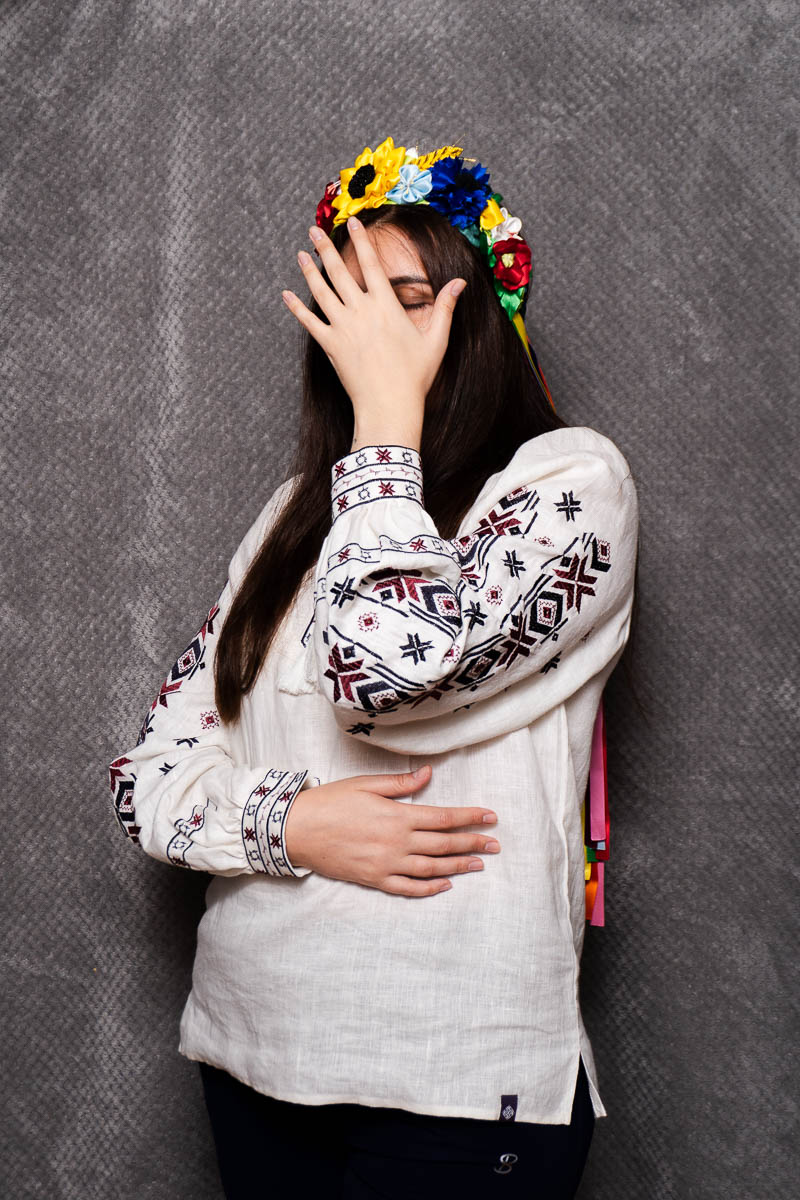
Vesna
Pictures taken in:
From:
Nationality:
Photo and interview by:
“Before the war, I dreamed of developing our business, my own store that we made for children,” remembers Vesna (pseud, 34) from Crimea, Ukraine. When Russia launched its full scale invasion, Vesna and her husband decided they could no longer stay in the occupied territory. She recalls “just packing our life into two suitcases, stuffing it into two suitcases and leaving.” The family fled through Russia and Belarus, crossing into Poland before finally reaching the United States under a refugee program: “That was it, these three days were probably the most stressful in my life.” Now living in Brooklyn with her husband and her young daughter, Vesna is rebuilding her life. “My strength,” she says, is “probably dedication. After all, it remained alive.” Though she still struggles to find work in her creative field, she feels immense gratitude to American society: “It was a warm feeling and understanding that you are welcome here, and that was great.”
Trigger Warning: Violence, War , Stress/ Trauma
full interview
Can you tell us please where you live now and with whom?
I currently live with my family, my husband and my daughter.
Where?
In New York City, Brooklyn.
Can you tell us how you spend your time? Do you work or study?
At the moment, I have taken courses, completed language, English language courses, and have also taken additional education courses. At the moment, I’m no longer taking classes and searching for a job.
Tell me what brings you happiness right now? What makes you happy?
The opportunity to express myself freely, think freely and not be afraid that if my words and my thoughts as a Ukrainian will be heard, they won’t be interpreted in a wrong way. This helps me a lot to live here. It is also very important for me that I can travel. Not in the sense of some long distance travel, it’s just that for me traveling is like living, like my second life and I love it. I have the opportunity to do so here. Plus, it’s probably a great joy that I’m not where I used to be and my child won’t study there where I used to be. Basically, this was the main reason why we probably left in the first place. Well, it’s a known fact, it’s because of what happened too but also because of the notion that we wanted to leave earlier than 2022 as we wanted to leave beforehand, since I didn’t want my daughter to be there, to see what was going on there and to get an education inspired by the ideology that was there.
You saying there, where is that?
We were, we lived in Crimea, in the occupied territory. But before we left… Since this remains Ukraine for us and the whole world, we wanted to move to Ukraine first, it didn’t work out for us there, and we wanted to go to Europe first. We thought of moving to Europe, but again there were some problems why we couldn’t move. And then the year 2022 happened. We didn’t think at that point anymore, we just sat, packed two suitcases and left.
Tell me how your life here turn out? After you got here.
I am very lucky because my sister has been living here for quite some time now, and she is very, very helpful and she welcomed us in that situation, under the stress that we… in that stress that we came and from that stress that we came from. That was a big support, not only from my sister, but, in general, from the American society. Including those very courses, I remember everything we went through, and I felt warmth everywhere, and it was very unique I would say for me. It was a warm feeling and understanding that you are welcome here, and that was great.
What good things have happened since you’ve been here?
To come to that what is good it is necessary I think first to speak about what was considerably hard. Leaving all things there, despite all the difficulties there we had a life there. But at one point, as I understand, many people, but, nevertheless, we left everything, all our achievements, all our lives there. And when we came here, it was quite difficult to adapt. Yes, a lot of good things are happening, and that what I said earlier, there is that lightness, its a general concept you could say such as the ease of breathing, you can feel it here. One is so different… well, generally, probably because I haven’t been in Ukraine in recent years, but we were still in the occupied territory, in Crimea, and with our Ukrainian views, it was very difficult to stay there. That’s why we basically wanted to leave. And when we got here, ahh, there was such a huge contrast between what was there and what came out here. And at first, even though I mentioned that we felt the difficulties of psychological pressure from moving, from losing everything we had there, here we felt, I felt comfort and joy. Because you can be yourself in the fact that you don’t have to hide behind… you know, the funny thing is that I had the Ukrainian flag at home that I couldn’t even pull out, I had embroidered shirts that I couldn’t wear. I couldn’t teach my daughter. Well, I was able to teach her of course, she listened to my Ukrainian songs and so on, and I read fairy tales, but she couldn’t learn her native language and we couldn’t speak my native language for the past eight or nine years, I don’t remember. And the point is that all this put a lot of psychological pressure on me and on us. The funniest thing about this whole story is that I came to America, to another continent, to another country, and I can speak Ukrainian fluently with the same people,immigrants, people like… people who moved after 2022 and that makes me happy. And I don’t know, there’s actually a lot of joy; it’s hard to put everything together like that. In fact, there are a lot of good things that the society and the American public support us with, and I’m really always surprised about this, not surprised but amazed, that will be more proper to say, and this really makes me happy too.
Can you tell us what was the hardest part? What are the biggest challenges that you ran into here. If you can, please share it?
Here?
Yes.
Haha, I don’t even know. Well, I guess the fact that I’m still looking for a job is difficult for me, because I can’t fully realize myself. The fact that our business stayed there, something that was really a very big part of me, in particular, it stayed there and here so far I see no reason to even develop this area, because it is not very suitable for this country. And I think it creates a lot of psychological pressure for me that I can’t keep doing what I love here, and it’s not profitable, to put it simply, it’s not profitable here, in my opinion. Basically, we calculated this way, we did some brainstorming; it’s very difficult, because it really was a creative direction that I liked, that I loved, and now it remains forgotten and old, as if out of this life. This is very hard for me and for my husband as well.
Can you please tell me, have you ever felt here that you don’t belong to this place, to these people who are here? If so, what is your gut feeling about, perhaps, being discriminated against because you’re a stranger here?
I definitely didn’t feel discriminated against .I think that, well, it seems to me, at least that every person who has lived to a certain mature age in their country and comes here feels like they’re a little out of their place, that they don’t really fully belong to this territory, because they feel connected, they have their roots in their country. Still, it feels like you’re out of place. But I think that it just takes time to integrate into the culture, mentality and so on of the country where you are located, you just need time to understand everything, learn everything and move along with the environment that surrounds you.
Have you ever imagined being here and having the whole experience you’re living right now?
Yes and no. I could imagine that I would be,.. and be here, because as such I used to have such thoughts. In 2014, especially, ahaha, let’s say, I thought about moving here after what happened in 2014.
Have you ever thought, that you’re going to live here and experience the whole experience you’re living right now?
As for [the experience] no, I didn’t think I was going to have this kind of experience, because when I wanted to leave earlier, it would have been some specific preparation. You’re getting ready, you know what you’re striving for. And when it turned out the way it turned out, you just suddenly entered a completely different world, as my daughter says. And this is a very, well, that experience, it is quite difficult because you have to adapt. Not that I can say it’s difficult, it’s just different from what you’re used to. You adapt, you grow with or rather, you are developing in a new place, in a new place with the experience that every day gives you, everyone I don’t know… the air, language that is all around you, and you begin to develop and grow at the same time, and yes, there’s some difficulty in this, but it’s also interesting, because you’re not standing still, you’re moving, you’re walking forward, you’re developing yourself, so it’s like yes and no.
What helps you with what you just said? What is your strength?
It’s in me, so to say. The fact that I have an energy that helps me move, that there are my loved ones, who in particular are my husband and daughter, my sister, who is there close by, and I feel their support. My friends who are still in Ukraine are constantly, despite the fact that they probably need more support, but they continue to provide me with some kind of moral support. The society that I have already talked about here several times; that wherever I go, no matter what courses I take, I feel some kind of support… all kinds of support, I would say so and all this helps me move forward. This strength lies in the fact that, probably, in addition to some inner energy, I receive some energy from outside, from other people close to me who sincerely support me and I don’t know, I just don’t give up. Let’s say so, I’m not giving up.
Got it. Can you please tell me how are refugees and migrants treated here in New York, in America? What’s your opinion?
Well, I can judge only by my experience, let’s say I’m going to judge by myself. And again, the experience I’ve been through, I can say that, well, maybe I’ve been lucky, I’ve been through a good experience. I still remember, I don’t know if I can say the name or can’t…
Yes you can.
My first English language school was here, it was Riverside, and it’s probably the warmest memories of any English language courses that I have ever taken in my life here or anywhere else. And it was there that such immigration support in every sense of the word was provided by all teachers and organizers. By the way, this is still going on and they keep in touch with us and that’s pretty cool. There were other schools where I studied and I also got some support. But Riverside was probably as simple as a breath of fresh air for me because before that I had a kind of depression period. Well, I think, again, a lot of people go through this stage. And when I went there, I started breathing again and, first of all, I also found some friends. I mean, there were many Ukrainians and some other peoples of other backgrounds. And again, I don’t know, I felt very comfortable there and I think it’s New York in general, It seems to me that in general, New York treats immigrants very well and tries to support them in every possible manner. And a lot of organizations are just an example that really support this.
Thanks a lot. Now let’s go back a little bit. Can you please tell me why you had to leave Crimea? What happened?
On the 24th, right? On February 24, a friend from Kiev called me at 5 am with words and tears in her eyes that the war had begun. I couldn’t believe it for a very long time. I was in shock and loss of strength for the whole next week from that day onwards. What was going on was beyond my head. It just doesn’t fit in my head. But the war started, and it was a kind of a point of no return. If until then, yes, we had our own nuances since then, that’s why we didn’t leave Crimea, but stayed there for health reasons, it doesn’t matter why we didn’t leave, then in 2022 there was no question of staying there anymore. Because, like I said before, it was very important, because my child will learn and absorb what that society, power and mentality offer, I didn’t want that. We discussed that in any case we would go anywhere before she goes to first grade. This was our goal, and we were preparing for it. No one knew that something would happen in 2022, she was only four years old at the time. But when this happened, when the war broke out, when my relatives in Avdiivka, my friends and relatives in Kyiv, Lviv, and well, fewer in Lviv, but, nevertheless, shells were flying in Avdiivka and Kiev, I had no idea how I could still stay in an area that had anything to do with this.
How did you feel then?
Mmm… I already said… I…
Feelings and emotions in specific.
Yes, I did say it already. Something… I just couldn’t do it. I couldn’t understand what was going on. I couldn’t come to my senses. I cried all the first week, I couldn’t work every day, I couldn’t go to work.
Ok, let’s stop for a short bit! … Your feelings and feelings when it all started.
It was pretty tough, it was very hard, it was unbearably hard. And you’re kind of in a safe, kind of safe area, you don’t seem to be in danger, but the people you love and know are in a place where something can happen to them at any moment, and you can’t influence it in any way. This was very difficult. And we just decided in just one discussion that we weren’t going to stay there anymore. That’s why we decided to give it all up, but I never regret it because I still can’t understand how things like this can happen in the 21st century.
Please tell me how you crossed the border. As it happened, your trip, your journey here. Who were you with? How was it anyway? How it all happened?
Since we were in Crimea, we had two options: to go through Georgia or take a detour because the planes couldn’t fly from Crimea, they immediately stopped flying, and we could only go through Russia to Belarus and then move on. We have had, we still have relatives in Belarus, and they also understand the whole situation, they look at this and what is happening just like we do. Of course, they immediately offered us their help, saying that they would be ready to meet us in Minsk if we could leave Russia. My husband wasn’t sure if he would be able to leave. We wanted to go with our family or not go at all. So we left, we took a transport in Crimea and moved to Moscow, from Moscow we went to Minsk. In Minsk, just a day later, we took a bus and left for Poland. That was it, these three days were probably the most stressful in my life, because I was very worried about how all this would happen at that moment, especially since a week later we were somewhere in a week or two weeks after the start, we were able to leave on May the 9th, I mean 9th of March, I still remember. And when we literally went through a very long trip to Poland, I remember when we left Belarus at the border control, he was a border guard, he didn’t even look at my husband’s passport, he gave us his passport and let us in without any questions asked. It seems to me that the border guard turned out to be so humane, and the same thing happened in Poland. There were a lot of people, mostly Belarusians, who were just going to Poland at that time just for some business in my opinion. There were us and also several other Ukrainians. And when we came with passports, we also just showed our passports. I understand Polish quite well, I can’t speak in it but I understand it quite well. I heard them talking among themselves that they are Ukrainians, and they should be let in without checking no suitcases at all, nothing at all. And we were literally let in within three minutes without checking anything. This was a kind of huge surprise, and this was also a very strong moment for us. And that’s it. And when we got there, it just felt better right away. And then after a while we took a plane and arrived here when this program appeared, it didn’t exist when we left.
What was the most difficult thing during this period when you left and before you got here?
The hardest part was the exit itself, because we weren’t sure that my husband would be released. When we crossed the border, it’s not exactly the border, but when you come from Russia to Belarus, border guards check there too, they get on the train, they check documents, and so on. We were very worried about this point because, well, everyone understands, everyone understands that they could have just taken my husband off the train, but there were no border guards, and we just went through freely. This was… there was a lot of stress, which, well, turned out to be nobody there later, it was weird. The same thing happened on the Belarusian and Polish borders. What I said was that we were very stressed, especially on the Belarusian side, because I wouldn’t, I wouldn’t go without my husband, no matter… I wouldn’t have left without him. And, that’s why ….it was the hardest moment of everything from the trip, rather, of the entire way here. We lived in Poland for several months before the program appeared and everything was fine there. But the only thing was that we did not plan to stay there, it is not our country, so to speak, we did not feel that we could stay there.
How did you feel when you left home, realizing that you might be going one way.
Well, that’s exactly how it felt when you’re leaving and you realize you might not be able to, never, or for the next many years to come home…you don’t know if you will be able to see your parents. And I’m still here, although it seems like I’m here, I still don’t know if I’ll be able to see my parents, because we’re under a program that doesn’t allow me to leave from here at least just see my parents. Parents, in turn, can’t come to us, and that’s the feeling when you realize that you’re leaving some of the closest people there. They have reasons, and I’m not going to say it, but they have reasons why they can’t leave, and you understand that you may not see them again, and you can’t go back there because of your views, and this condition is probably the most difficult thing in this whole situation.
Do you think about this a lot now?
Yes, quite enough. We’re keeping in touch. Of course, we talk almost every day, but it is clear that this is not enough, and we want them by our side here.
How do you feel? How do you feel when you think about all these things that happened?
Anger. I feeling angry, I feel confused.I don’t know, I still can’t believe that in the modern world, such issues are not being solved, and that there are so many lives…. I don’t know, it’s hard for me to answer all this.
Let’s keep going. Can you please tell us how this experience that you went through influenced you today? What new things did it bring to you?
Well, let’s start by saying that probably it added confidence that I can do anything. More than I expected from myself, especially when I have someone close to me and my family nearby. The fact that you should probably not focus on the material things in general and know what you should value every moment you spend with loved ones and the emotions you feel around you. Therefore, now we really focus less on something mundane or something material, and probably more on emotional things.
When you left and then arrived later, did you have a strategy, a plan for what to do next?
No, there was no strategy. When we left, we didn’t even know where we were going. To begin with, there wasn’t even a program like United For Ukraine. We just went out because we didn’t agree with what was going on. It was probably like an act of protest and a desire to just leave from there, to leave from there, leave that which indirectly has something to do with what is happening there. And we were actually going nowhere. We’ll talk like we did then. We were going nowhere, we didn’t know where we were going, we didn’t know how we could get there, we didn’t know what would happen in Poland, who we were going to Poland for. Although, of course, later it turned out that there were people who accepted us, but the very fact is that we just left, that’s it, it was like leaving, just packing our life in two suitcases, stuffing it into two suitcases and leaving. It all seemed like this. Later, when we were already here, of course, we started planning something specific, some actions, learning the language, and so on. These are already more consequent steps.
What was your support at that time and what, I don’t know, what were your strengths that helped you overcome all these difficulties. There was no plan. It was not clear where you were going, why, well the why part was clear, but it was not clear what to do next. Where did you find strength and support?
Ahhh, friends, optimism and a desire to move forward, not to give up and, despite everything that was going on around, just to find the joy that helped us move forward again and strive to develop. My daughter, whom I think I’ve talked about this many times, it was important for me that she got a good education, but not there, haha, that was probably one of the most important aspirations to move. That was one of the most important ones. AND… regarding me, well, I’ve already said that I really consider myself a fairly purposeful person, and I don’t give up and try not to give up in any situation. Of course, I have moments of some kind of depression, probably just connected to everything that’s going on. Nevertheless, I don’t give up and I try to help others so that they won’t give up too.
If you remember yourself before the war and remember your dreams before the war, could you share them? If so, then start your sentence saying: before the war I dreamt about…
Mmm, before the war, I dreamed of developing our business, my own store that we made for children. In general it was a children’s store for ecological goods, an eco-goods.
Before you left your native place, do you remember what your strength was? Then, at that point, what were your strengths, what were they? And did you manage to keep them today?
A strong point. It’s probably dedication. After all, it remained alive. But, of course, the whole situation hampered it a little bit, but I’m taking it back nonetheless. I feel like I’m slowly getting it back to myself now. But this, of course, took time. It is not in vain that they say that migration requires a longer period of time for all those various kinds of processes. This is actually true, I tested this on myself and I am convinced that it is true. Everything that happens to us in a foreign country, starting with language and everything else, slows down our process, slows down our development process a little bit. But, nevertheless, when you go through a certain stage, you begin to feel the surge of energy that you once had before, and everything falls into place. And my dedication is starting to come back as well as my creative side. I love everything related to creativity, and it is also gradually starting to come back, and that makes me happy.
Do you feel that this whole difficult experience that you had to go through, brought you something positive, something good.
Well, …it goes without saying that it did really brought a lot of positive things, but sometimes,it’s even a little embarrassing to think about all these positive aspects when things happen in your country, that you seem to continue living while there the situation is the one it is, and because of this, it seems that you are slowing yourselves, you are waiting, that feeling that you are pausing yourself sometimes, that you are waiting for it to end or something positive to happen. Thus, you might actually not let yourself live a full life, probably due to the fact that you constantly keep turning to that what’s there… Well, yes, a lot of good things happen here and we continue, we continue to live and continue to strive for new heights with our goals, set goals and try to achieve them despite everything.
Thank you so much for the questions. We went through all the questions with you. Perhaps there is something we didn’t touch on that you would like to tell people who are going to read your interview and who have no refugee experience or experience of being displaced, in order to better understand you and other refugees who have had this experience, so that you would help them by saying something and tell them what it’s like to be a refugee.
I can tell such people that they should not be afraid to take the first step, to make a decision, because it is always scary to make a decision, it is always scary to decide to change something for themselves. If you’re in bad conditions or if you’re in danger or something else. Well, in particular, when it comes to our history, on the one hand, yes, you want to stay there and support the country, but on the other hand, you still care about the people around you, in particular, your child. And I, a lot of what I do, I may have already talked about it a little bit, but I do a lot of what I do for her [daughter], in general. The point is, one just has to decide if you have any such thoughts in your head, this is like a seed that gradually begins to germinate, and if you have any, then you should probably think about it and walk in that direction simply moving in the direction that one chooses. It’s actually not as difficult as it sounds. The first feeling with which I came here, after living here for a short time. If you won’t sit and do something, it’ll show up again where you are. It’s just all about realizing what’s more important to you, you have to weight it, ahh…well again, every story has its own sides, and if either side outweighs the other… for example, it was really important for us not to stay there, so we left and I think we did the right thing.
Thanks a lot.
Many 1000 Dreams interviews were not conducted in English. Their translation has not always been performed by professional translators. Despite great efforts to ensure accuracy, there may be errors.