





About Refugees, By Refugees
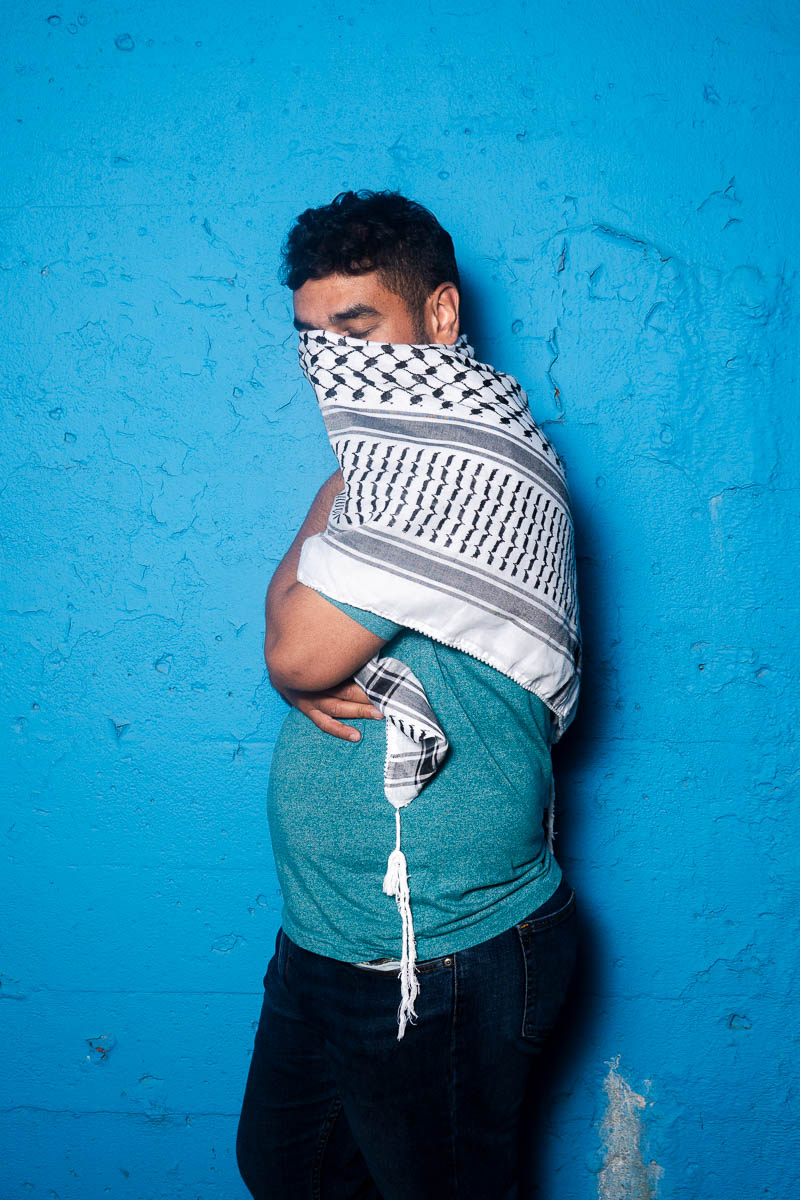
Ahmed
Pictures taken in:
From:
Nationality:
Photo and interview by:
I left my country because of the war. I’m stateless. I don’t have nationality. We are from Palestine, but we don’t have a country,” says Ahmed (35). He now resides in Michigan, and despite being far from his family, who are in other countries, he says he is happy “because they are safe now.” Ahmed’s journey to the United States “took me almost two months,” with stops in Turkey and Mexico. The entire time, he says, “I was always thinking about being safe.” Ahmed says: “War can’t be put in words? War is ugly and messy.” But, he explains, the challenges he’s faced in life have made him “a person that can solve problems, not create ones.” Ahmed remains optimistic for the future: “I always think about how to help people.” Before leaving Palestine, he dreamt “that I’d continue my studying and have a master’s degree in nephrology.” In spite of the long process to seek asylum, Ahmed’s dreams have not diminished. Now, his dream is “to start my practice in America and get my medical license.”
full interview
Good evening, my name is Magugu. I’m from the Witness Change Organization. We have a project that we are running of 1000 Dreams, where we are profiling immigrants and refugees who have come to America. Some of them are fleeing conflict. Some of them are fleeing persecution from their country. We are doing this so that refugees can tell their own story. The refugee story has been told a lot of times, but in most cases it’s not the refugees themselves telling their story, but other people, third parties. We want the right story to go out there to influence policies that will favor refugees. I will ask questions about why maybe you left your country, why are you here, and some of them may be personal, but you can respond or if you can’t talk about it you can say “I can’t.” I’ll start by what kind of housing do you live in and who do you live with currently?
I live in a freedom house. I live with people in a peace room and a freedom house, a shelter for refugees.
How do you spend your time here? Do you work or not?
No, I don’t work, I just go to library, go to the mosque, reading. These are the things I do on my day.
What are some of the things that bring you joy or make you happy?
Good food.
I’m sorry about the interruption. How has it been life since you arrived here?
My life in America? Was good. I was in California. California is a very nice place to live in. I was living with a family. And they were nice. It was nice.
You say you are living in a sheltered freedom house, how does that make you feel?
It’s like a complicated feeling. I can’t say I’m sad or happy to be here. I really like… I feel sorry sometimes, feel down, feel up, it’s not like a stable thing for me.
I was asking you about how it makes you feel to be sharing your space with other people that you don’t know from diverse backgrounds?
It’s uh…. it’s like sometimes it’s funny to communicate with people with gestures because we don’t speak the same language. I speak several languages but sometimes I, for example, the last time I spoke French was 18 years ago. I didn’t know that I still know some French. I totally forget that. So people was reminding me that “you spoke French with this lady” or “you speak French with that man”. I said I know very little. But now I like I start to remember. It’s nice. Sometimes at nights when the room was full with people, some people will snore so I can’t sleep. It’s something I didn’t used to.
What has been good about being here and what has been difficult?
What’s good? Because America doesn’t offer shelter for refugees. You need to find your own house when you can’t work right now. So it’s really difficult. Other than that, but other than that it’s a really fun experience so far. I’ve only been here for less than one month.
And what has been difficult? What challenges have you faced?
One of the biggest challenges is the bathroom. I need to wait so much time for using the bathroom in the morning.
How does that make you feel?
It’s funny, not like make me sad, but sometimes I need, if I wanna go out, I need to woke up earlier than the thing. Sometimes I need to use the bathroom before meeting with the staff here at Freedom House.
And how does being away from the rest of your family or being away from home make you feel?
Sometimes I really miss my family, but the thing is I know my family now, they are safe because they came from conflict and war zone country. So when I think about my family – my father, my mother and my siblings – because they are safe now, I feel happy, even though I am distant from them.
If you face any discrimination, stigma? If so, how does it impact you? Can you describe it?
In my whole life or here in America?
In, wherever?
Yeah, I feel discriminated because I’m stateless. I don’t have nationality. We are from Palestine, but we don’t have a country. So around the world, nobody recognizes the country. We don’t have a territory. So that’s one of the biggest challenges I faced in my life. So it was a really big stigma for me.
So, where are the rest of the Palestinians?
All over the world. One of them works here, Hussam the Psychiatrist. He’s Palestinian but he moved to America 40 years ago and now he’s American.
How does that make you feel to be stateless?
It feels bad, but like, what can I do? Like, it’s bigger than me. It’s something like seeing it as like, it’s one of the world’s biggest problems. That’s, I don’t have a control.
Could you imagine that you would have been able to handle this situation? And how have you been able to overcome, survive, live with all that is happening or all that has happened in your life?
I think I got more opportunities than other people from my country because my family is like say middle class family. I had opportunities in school and stuff like that. So I went to school. I studied medicine. I started medicine so I learned languages. [inaudible] Dilemma for me like other people
Do you think that you have developed the ability to deal with these challenges or you always had that ability?
No it’s to grow up with me, how to deal with challenges.
How do you deal with them?
Now because I read the laws in every country I visited. So I will prepare myself to all situations. I avoid problems and conflicts as much as I can.
How do you avoid convicts?
By not doing… by following the laws most of the time and also being aware that’s my vulnerable situation could make me have more problems than regular people.
And how does that make you feel?
Sometimes it makes me feel down because I lost time that people will do things faster than me because I have these challenges in my life, but it makes, maybe, makes me more… Practical person, more a person that can solve problems, not create ones.
How do you think refugees are perceived in this country? Do you feel safe here?
No, no, I don’t. Maybe with the new current administration in the White House, no. I can’t say I feel safe.
Okay, if you don’t feel self, how do you feel? Like scared?
I’m not scared, but I can’t say I feel safe 100%.
But do you think, what do you think about the way refugees are being handled in America?
For now… I can’t give an opinion right now, but before it was like way better people can, safer in America.
What has changed?
Now, people get deported without due process. People could be detained for no reason, without a judge order to be detained. And also, now the administration will use the… Like the situation in the country where people like we don’t like people to come to America so we need to deport all foreigners here. So they use this situation also to make people feel unwelcome
And as a refugee, the fact that… the government has changed its stance against refugees, or how do you view the future of refugees in America?
America is a country of immigrants so even though that’s now the refugees is not welcome or not feel safe as before it wouldn’t change them the future of them they couldn’t deport all people that came here as refugees. It’s impossible so this determine the future of people here. That they will survive and they will stay.
Why did you leave your country? Can you describe what happened?
Yeah, it was a war, conflict, war, unfortunately I was from the lucky ones who could leave. So because of that I left my country because of the war. After the war started in October, in October I could leave in January, so I spent four months only in the war.
You have experienced the conflict. Can you describe what was happening briefly, so that we can have an idea? Because you have seen what has happened. Put it in words.
Uh, it’s war. War can’t be put in words? War is ugly and messy and… It’s blood thirst
And how did that make you feel?
It makes me feel like I could be killed, I could get tortured anytime, so that’s why I needed to be out of this situation. So maybe in America I can’t feel safe 100%, but I know for sure that I wouldn’t be tortured as much as if I stayed. I wouldn’t be killed and suffer without medical attention. So in America, the worst thing will happen to me now, they sent me back to jail. I was already in detention center for three months. So now I’m out. They released me in December last year. [inaudible]
Sitting in prison, what were your thoughts?
So many thoughts. First I couldn’t talk to my family for I think the first month, couldn’t reach out for my family then I reached out for them. Present experience I can’t say it was totally bad. Maybe it was make keep me thinking how life without the freedom feel like.This is the first time I was in prison.
How does it feel like life without freedom?
It feels so many things. You sometimes need to do thinking about your past. So I thought about all the things I had in my life before. Like friends, family, loved ones, even the people I… used to be married before, my ex-wife, I thought a lot. I couldn’t like tell like what’s the future will be like if I stay more time in prison without any… Then I adjust myself to the present time that’s how I could do more, how can I say, more like… Activities that will make me feel better and the things. One of the things was like the prison was super cold all the time. The rooms was cold. It was a cold experience. We couldn’t have long sleeve clothes like this in the prison. We had to buy it from outside and I didn’t have money so
And how did that make you?
It’s less than the conflict I came from. I didn’t come from a rosy place. I came from a war. So the prison at least you are safe. Sometimes the guards will be mean. Sometimes they do things that it’s unhuman. But in the end of the day they wouldn’t hurt you bad in a situation that you couldn’t survive anymore.
And how did you overcome that?
Overcome after I left the prison?
When you’re in prison, the cold, the mean people…
It wasn’t like, I’d say that my prison experience was horrible, 100%. I had fun time in the prison, because I met so many cultures, especially I met Indians and Chinese. I never met Indian and Chinese before. My roommate was a nurse from India. He was a very nice guy. I had so much fun talking to them, especially at nights because they used to lock the door at our cell. So I talked to him. He’s very nice. He introduced me to his culture, also I was, because I’m the only one who speaks proper English in the prison, I was translating for all people, even that I don’t speak their language, but sometimes they need to write letters to the lawyers, to the judge, to ICE officers, so I was doing that. Also I… Maybe I was in the Mississippi area. It’s like really different than the rest of America. So I had also the experience to meet the people from Mississippi earlier
And the day you were released, how did you feel?
To be honest, to be honest the day I was released, it was like so much complicated feelings because they transferred me from the facility to another facility. So I didn’t know I was, when they transferred to the second facility, I wasn’t thinking about they will release me. I think I will stay more time here then I will go to the court or something. Then my friend, I called my friend and from the prison phone, because I couldn’t find the paper they give you when they transfer you to free calls. So my friend told me, okay, now I’m buying you a ticket to come to me. I told him, why? He told me they will release you tomorrow. I didn’t know that. So this is the moment I was happy. Because when they transferred me to the second facility, the second facility was better than the first facility. The second facility was in Louisiana. So the food was better, people, less people. But the people were in the first facility was people stay only for a little time, four months max. The second facility, I saw people in the prison for two years. So the beginning makes me like, that’s very optimistic, but then the food much better, the activities more. Louisiana is different than Mississippi in many laws. It’s a little bit better. So the day I was released, I was happy to use my phone. I was going to call… Friends and family and tell them, let them know that I’m out and also I wanted to have food, normal food, and have my room in a hotel so my friend my friend they couldn’t find me a bus in the same day so I have to I waited in a room so the first thing I was like reading things in my phone and listening to videos. And also I washed my clothes because when they released me, they released me from the clothes I came in with, which was dirty, so I washed them. Also I had drinks and that’s it.
Let me take you back. You said you are happy that your family is safe. Have they moved out of Palestine?
Yes, they move out with me. We move out together.
Are they in America?
No. They are in other countries.
Okay. Oh, so you didn’t come, go to the same countries?
No.
Okay. Why?
Because we can’t get visa. My dad and mom, because of their age, they could get visas for other countries. My siblings, they are students, so they register in some universities and go there. Me, the only one, was like, I don’t have. I’m not a student anymore and I’m in military age so it was dangerous for me to stay in the Middle East area. So I left first to Ecuador, then from Ecuador to come here. I wasn’t planning to come to America.
Maybe if you can explain, or describe, or tell me about your journey from Palestine up to America, like, you know?
I have pictures from the journey. I can share it with you if you want some pictures or some videos from the journey. First I went to Istanbul, Turkey. This place where I study also so I speak the language. So from Istanbul I took a plane to Bogota, Colombia. Then from Bogota I took another plane to Ecuador. So I arrived to Ecuador, nice country, beautiful, very beautiful country, gorgeous country with all the trees and fruits and everything. But unfortunately, it’s not safe. It has conflict like Palestine or maybe more, but let’s say because there is no heavy machine war, there are no aircrafts or things, it feels safer because the violence is at a lower level, but it’s also violent. So, I stayed there for 40 days. I don’t speak Spanish. I couldn’t find opportunities. I don’t have enough money to stay, to overstay there. So, I decided to come to America. Because people were coming to America from the Middle East also. So I talked to some people, they told me you have to come to Nicaragua. So I went to Nicaragua. And I had a layover in Panama, which is one of the countries they told me that they wouldn’t let you go through. They will send you back to Ecuador. So they sent me to Panama, from Panama I passed the airport, nobody talked to me, nobody stopped me, nothing. Just got to Nicaragua. From Nicaragua I couldn’t find somebody to lead me so I talked with people in the airport and some of them let me know that he has other three people from the country next to my country. This we speak the same language. They are from Jordan. So I went with them from the capital in Nicaragua until the border of Honduras. We had three very nice guys, very funny guys , we had a lot of fun in that way. Then we stopped in the like very nice hotel like it’s like not more like not a hotel hotel it’s like a house they put some…
It’s AirB&B?
No, it’s not.
Oh, backpackers?
Less than Airbnb. Then we stayed there. I tasted very nice coffee. Then, we crossed the borders.
How did you cross the border? I want this story.
Yeah, the crossing the border to Honduras, we never need nothing because there’s no borders. Just you cross and after that you go to the United Nations and you register there. Then they will let you go. The police come and take your pictures and you go. They give you a paper that you’re not allowed to stay more than three days. We went to a hotel, a very nice hotel, with the swimming pool and everything. But all this way, there is no place to have a hot shower. There is no hot water in all these places. Then we met with a lady from Cuba and her daughter. Okay so they told us this is this lady and her daughter, they will be your journey mate. We met them when we left the hotel in Nicaragua, then we stayed the night, then they took us to the capital of Honduras. Then from the capital we take a bus to the Guatemalan border. We took a bus for like one day I think, one day, yeah. So we arrived at the Guatemalan border. A man with a car took us to a place, we climbed the stairs and we entered the borders. Like, we go around the immigration and the police. Then another car took us to a town in the border, so we stayed there. And they told us, okay, you can get some sleep because tonight you will go to Mexico. So we slept, I didn’t say I slept much. I slept like two, four hours. Then, in the evening, the cars came and took us to the Mexican border. No, to the capital, to Guatemala City. From Guatemala City, we take a bus, super cold bus, super cold, I got sick from that bus. On the bus we arrived to the Mexican border in the city called Tapachula in Mexico so we crossed the river and to Tapachul. I can show you the river. Do you want to see it later? So we crossed the border and we were in Mexico so in Mexico there is like a young lady came she’s like very looks very poor and uh and shaken. Told us hide your money now we will go to a cartel or a mafia checkpoint if they saw your money they will search you. If they saw money on you, they will take the money. We go through them, then we find a very big mountain and there is a river and a bridge. We need to walk this bridge. So we walk the bridge until the point where we find people with cars. They show us our pictures. We go with them and then take us to the city center. Where we stay in a house. I stay in the house for one week, I think. I get very nasty, nasty mosquito bites. One of the most aggressive mosquitoes in the world, that city. I couldn’t see much because I stay in the house because it’s a dangerous city. Then we move from Tapachula to Oaxaca. Then in Oaxaca, we stayed in a place for one morning, then they took us to a farm and put us in pick-up trucks, very uncomfortable situation. In these pickup trucks, we stayed one day, like 24 hours. But they stopped three times so we can use the bathroom and eat something. Then after this, we arrived to Mexico City. We arrived to Mexico City to a house of, they call Coyotes. Then these coyotes, they didn’t let us go, people who speak Arabic. The people who speak Spanish, they released them and they told us, people speak Arabic you need to pay us more money, to take care of you. So three people agreed to pay them money, so they took them to another… Another city called Tijuana. Me and one of my friends we couldn’t find money to pay them so they held us hostage for three weeks until we got run away from them in one situation. Then we arrived, me and my friend, we arrived to a hotel in Mexico City at the city center. Then, we talked with some other people so they pick us up. And took us to a house. In that house we stayed also one week then they put us in big trucks – the trucks to move vegetables and stuff and took to a city called Turin. From Turin So they changed the pickup truck, so they put us in a very cold, very cold truck. The guy from Egypt, he was with and he got sick also in the truck. And there was a lot of women, a lot children from Latin America. So we stayed in that truck for 36 hours.
Did it have windows?
Nope.
There was no ventilation?
No no it’s cold. It’s refrigerator. It’s the refrigerator truck. That truck they use it to move the you know the meat. It’s horrible then when we arrive to the border they tell us okay go out. So we talk to the [inaudible] done with us we come to take us no so when I get from from the cold weather to the super hot weather, I got super sick. So I stayed sick for eight days. Then me and my friends, we couldn’t continue the journey to Tijuana. So we told them, OK, we will cross the border now, because we are staying in this hotel in the middle of nowhere. We can’t go to the hospital, because the immigration police mixed companies will catch us and maybe do bad things to us. So I tried to cross the borders with my friends in the middle of the desert. So, the guy with us, he was like, I don’t want to [inaudible] myself to the immigration, I want to walk. So we walked, we walked for like four hours, then I told them, look man, I’m sick, I can’t do it. Maybe now it’s night, when the sun rises, it’s a desert, we will die. So we were looking for the border patrols. We find one of them then I will surrender to them when we are, and I tell them I’m sick to take me to this place where I get medical attention. Then they move us to another place where we can get shower and change our clothes.
How many days did you stay without showering?
No, no, only one or two days. Because when I was in the hotel, there was water in the kitchen.
So what was going through your mind throughout this journey?
I’ll tell you- nothing, because I was sick. But before the journey, when I was in Mexico, I just want to be safe. I just wanted to be safe all the time. I was looking for safety.
And how did you overcome the challenges like you are in this journey, you are sick, you are stranded?
I was sick only in the last 8 days, but before when I started the journey, the journey took me… Almost two months, almost two months. So the whole time, the whole time because I stayed in Mexico for 40 days. So, the 40 days in Mexico. I was always thinking about being safe, so I started my journey on the 10th of August and arrived to America on the 5th of October, so it took me two months.
And how did that make you feel?
Of the journey. It’s an experience of life. I couldn’t imagine that I could go through it. Maybe I think why I didn’t do this 10 years ago when the conflict started in 2014, when the big conflict started. But always the conflict was two months, three months, then ended. Why I didn’t think about this 10 years ago, why I didn’t I go through this journey 10 years?
Do you think about these events often? Do you often think about them?
If you don’t ask me now…
You just let them out in your mind? Why?
Because it’s not as much as my people suffering. It’s bad situation maybe for people who’s like coming from normal situations. For me, it was nothing.
So these experiences, they don’t affect you today?
No. The war and conflicts affect me more.
How do you feel when you think about this, the conflict back home?
I’ll try to not think much about that.
Could you ever have imagined that you would be able to handle that situation? Could you ever have imagined that you would have been able to handle that situation?
I don’t like, a human mind couldn’t imagine the situation without being in the situation, you understand?
Now that you have been in the situation?
Now I’m looking for the future, to be honest. Maybe I’m not, for my mind I’m not very young, but people tell me I’m still young. I still have, I’m, not reaching 40 years. I’m 35. I’ll be 36 in two months.
How were you able to cope with everything that you went through?
Come again?
How were you able to cope with everything that happened?
Cope?
Yeah.
Cope? I don’t understand what that means?
Coping like, how can I put it? Managing to live within that situation and getting out of that situation. Did you have a strategy?
No I don’t. have a strategy.
Or it just happened naturally?
I don’t have a strategy. I think it’s happened naturally to me.
What are your hopes? Okay, before you left your country. What was your dream for the future? I want you to say, I dreamt that…
I dreamed of making specialization in nephrology.
Can you repeat that? I dreamt that.
I dreamt that I’d continue my studying and have a master’s degree in nephrology.
Before the event that made you leave or flee home? What was your dream?
This was my dream, I dreamt of that.
Before?
Before leaving my country, yes. After I left my country, I don’t have,now I’m dreaming about taking my medical license here in America.
Okay, I want you to say, my dream is…
Now?
Yes, now.
Yeah, my dream now is to start my practice and get my medical license in America.
What you have been through seems really difficult. Do you feel like you have grown in any way as a result of this experience or has anything at all positive come out of it?
From the journey?
Throughout your experience?
I say cultures. This is something. It’s very like…. I try to enjoy the cultures in Latin America. It’s really different. Nice food, nice people, warmth. How to manage the situations, how to make you feel.
What are your strengths?
My strengths? I’m a young man, so maybe that. I was prepared for bad situations all the time.
You are done?
Yeah, maybe because I have strong abilities.
How? Because I stay in school, I stay under pressure, under struggle. Lack of everything, sometimes lack of sleep, lack of dietation, lack of communications, so I can adjust myself to bad situations.
What are your strengths? Strengths? Your strengths, like what are your attributes?
I can’t answer that for myself. Maybe people around me can answer it better than me.
But what makes you, you?
My experience in my life, eh?
I want to hear that experience.
I don’t know, being born without a nationality, born stateless, living in the Middle East, saw war and conflicts, gone to medical school, studied for a long time, for many years. Not paying attention to small things in life, like materialistic things. People like to have cars, to have house, to like luxury stuff. I never think about it. I always think about how to help people- first thing in my mind. I try to help people in a way that’s when people need help. But people sometimes they don’t need help. So helping them a medical one of my pleasure in life. So that’s what make me.
We really appreciate you answering all these questions. Is there anything you would like to add that might help people better understand your experience or the life of refugees?
I don’t know. I don’t have anything to say, I don’t know if my experience was… Enough to give people advice but always I’ll tell be optimistic.
Okay, I want you to repeat that thing where I asked you about your hopes and dreams for the future now. What is your dream?
Now, my dream is to start my practice in America and get my medical license.
Thank you very much.
Thank you.
Many 1000 Dreams interviews were not conducted in English. Their translation has not always been performed by professional translators. Despite great efforts to ensure accuracy, there may be errors.