





About Refugees, By Refugees
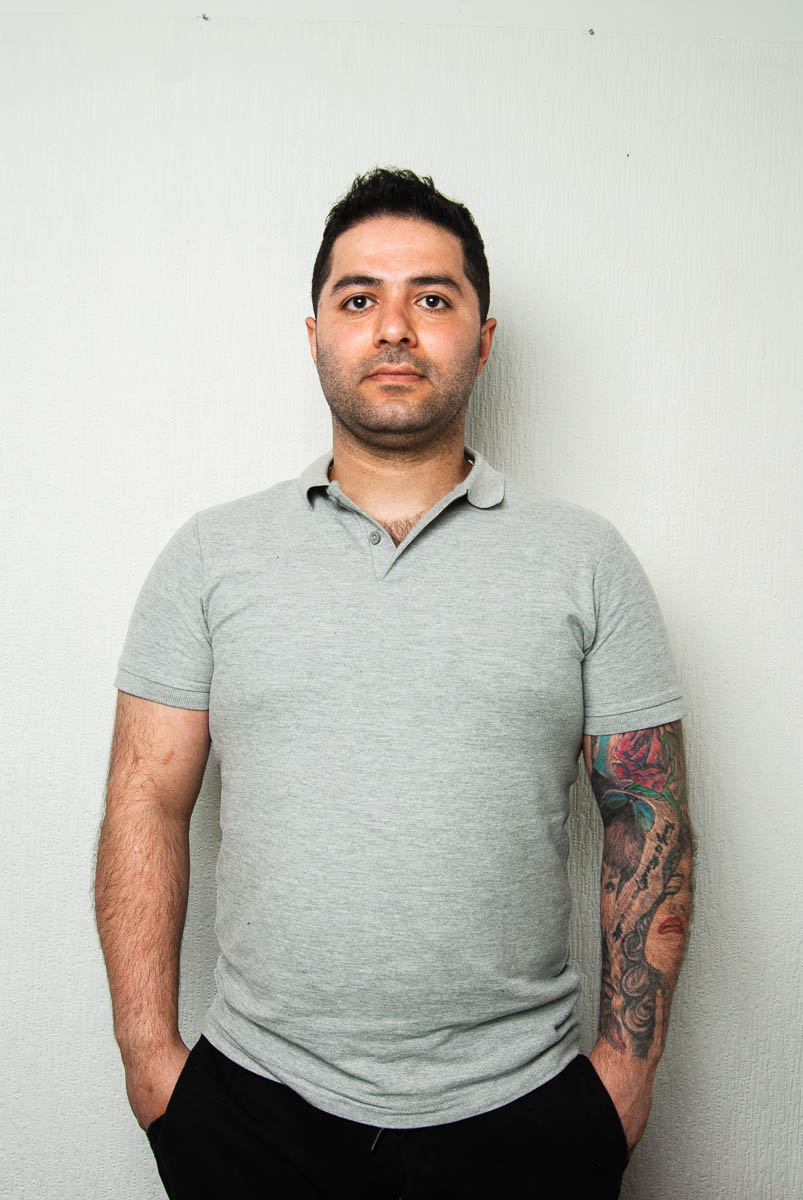
Farshad Mehdizadeh
Pictures taken in:
From:
Nationality:
Photo and interview by:
“Here my mind is open, and I cannot focus on one dream. But I think I can have whatever I want here,” says Farshad Mehdizadeh(30, pseud), a refugee who fled Iran for financial reasons. “It was exhausting that no matter how hard you tried,” he says, “you couldn’t reach your goals.” He says immigrating was challenging because he and his wife travelled together, so he felt pressure to keep her safe. They travelled around Europe for a year trying to find somewhere to live before they settled on their current home. He says learning to live in a new country is hard: “It is like I was born again and had to learn how to speak and behave in society.” He fled Iran seeking economic opportunity. He hasn’t found the financial success he seeks yet, but he retains high hopes. “This journey taught me lessons and altered me… I think I am a much better person now than in the past. It was good for me.”
full interview
Hello, I am Nina Sadaqati, and I am assisting the Witness Change team. We are working on a Thousand Dreams project. We are intended to write the stories of one thousand refugees. The goal of this project is to show a brighter image of the refugees’ society. As you know, the image of the refugees’ society that has given away is not a real or a bright one. There are mostly information provided through journalists or new reporters. They are different from who they are. There has never been a narration from the refugees themselves of their lives and the struggles they’ve faced. Maybe that is the better or worse picture, but we want to show what is real because of this we have decided to launch One Thousand dreams project. In the interview, I will be asking a set of questions, and you can skip over any that you do not wish to answer. Also, if you don’t want to give your name, you can use an alias. If you like, introduce yourself. We have a form that is written that you are agreed to join us in this interview. I am giving you this form and want you to sign it. Then I ask my questions. So, introduce yourself.
Hello, I am Farshad Mehdizadeh, 31 years old and from Iran.
Where do you live now? Talk about your situation.
I live in Liverpool, England. I am satisfied with my life here.
I asked about your life’s situation. Tell me when did you leave your country, and when did you arrive here?
It has been four years since I have left Iran. And it has been 3 and half years that I have been living here. And my asylum has been accepted.
How long has it taken that your asylum has been accepted?
One and half years.
You have a private house. The government didn’t give you the house?
No, they didn’t. I rented the house.
Who do you live with?
With my wife.
You live with your wife?
Yes.
Can you tell me how you spend your time and what your recreation is?
Well, I go to work in the morning.
What is your job?
I work in construction. After work, I spend my time at home. And on the weekends, I spend time with friends and go on picnics.
How was your life when you arrived in Europe? Explain it. When you arrived in Europe, what did you experience?
In the beginning, it was so hard because we didn’t know the language and couldn’t communicate effectively. We didn’t know the places and people. It was hard for a while. But as time passed, we learned how to find ourselves in the community.
What has been interesting to you in Europe? What attracted your attention?
Freedom and peace. Everyone is free to do whatever they want to do. People have freedom of speech, unlike how it is in my own country.
What has been difficult for you here?
I couldn’t speak the language and couldn’t make friends quickly. It was hard for me. I didn’t have a British or European friend.
How is your feeling about Europe? Are you satisfied?
Yes, I am. Here we have freedom and peace.
How has the absence of your family made you feel? Are you dependent on your family?
I was not a dependent person. Now I am here and spend my time and have my wife here with me.
Are you unhappy?
No, I am not.
At all, the absence of your family doesn’t bother you?
It doesn’t bother me that much.
Have you ever thought about experiencing this kind of situation? How have you passed this stage of life? Maybe it wasn’t hard for you. You can say whether it was hard or not. How old were you when you left Iran?
I am 31 years old. I left Iran 4 years ago when I was 26 or 27.
When you left Iran, did you think that you were going to experience this situation?
Never. I didn’t even expect to leave Iran at that time. In the last months of my stay in Iran, I didn’t assume that I would leave Iran and start a new life in another country.
How did you manage to pass these difficulties?
I had to. Most of us are forced to endure hardships to reach our goals.
Can you talk about your skills? What skills have improved? For example, in Iran, you don’t need to make friends because you have friends. Life is more comfortable in Iran than England. You are here. You said that the most disappointing experience was that you faced problems in making friends. How did you solve it? Have you solved it now? Do you have this problem now?
I still face obstacles. However, with the help of technology, body language, somehow I could communicate with some people. As time went on, it was getting normal. It was hard when I came from Iran. It is like I was born again and had to learn how to speak and behave in society. I am trying my best.
What is the effect of COVID-19 on your life?
Because you are a refugee, has it affected your life and job? It affected everyone’s life. At all, it was not that hard for us. I could handle my life in COVID-19 pandemic.
What was the reason that you left Iran?
I was tired in Iran. It was exhausting that no matter how hard you tried, you couldn’t reach your goals. Financial problems made me leave Iran. I couldn’t live peacefully. These reasons made me abandon Iran.
How did you feel when you were leaving Iran? Explain how you came here?
My migration was so challenging. For single people, this could have been slightly less challenging . But for me, it was so hard because I was not alone.
Who was with you?
My wife was with me. Because of this, the pressure was double fold on me. I don’t want to experience it any more. It is really hard and dangerous.
How long has it taken since you arrived here?
We were wandering in Europe for about one year. Finally, we have reached here. It took one year to reach England.
What was your feeling in that year? Were you satisfied or you regretted? Or did you like to continue the trip?
Everyone makes decisions before doing anything. I made up my mind to continue. I was tired and disappointed in some stages, but I had to get what I wanted. I had to.
You were forced to continue?
Yes. I thought that I had to move forward, there was no going back. If I return, there is no life and opportunity.
You didn’t think about returning?
No.
Years have passed from the day you left Iran. Do you remember those days?
Yes, a hundred percent.
How do you feel then? Do you get upset?
Yes, I become unhappy. Some of the incidents make me upset. And some of them are memories.
When you think about them, how do you feel? Do you feel sad? Or you are satisfied that you have arrived here and made your life.
It depends on an individual’s situation. For me, I am good. I endured the difficulties, and now I am working hard to make my life better. If I think a lot, it makes me upset. But I am improving now. I am satisfied.
Has it had a bad effect on your today’s life?
It could have been worse, but it wasn’t.
Had you ever thought that you would have to handle these incidents in your life?
Never.
I think you answered this question. Have you made a way that helped you to improve yourself? You said you were compelled to continue the journey and have a better life. Are there any other ways that you would have carried out instead?
Well, there could have been other ways. But it didn’t come to my mind. When you are put In that situation, the mind can’t think well. At the moment, the only thought going through your mind would be that I want to go and reach a better place.
Would you tell me, what your dreams when you were in Iran before you reached the decisions to leave Iran?
Everyone has a dream.
Start with this phrase, “my dream was”.
My dream … I don’t know what the dream was. I wanted to have those things that I wanted. I wanted to live comfortably. Most of us who live in Iran, our dreams are not clear. We lost our dreams in Iran. Most of the people are like this. When I speak with my friends, they laugh at me because I wish I wasn’t born in Iran. It is counted as a dream. I have always wanted to become a veterinarian. I wanted to study, but I couldn’t.
Now you are here. After you pass all those hardships, what is your dream?
I want to improve. I see the potential. I can reach whatever I wanted before. I have achieved some, but….
Could you start with this phrase that my dream is this?
My dream is … I have a peaceful life. I can have a lot of things. Here my mind is open and I cannot focus on one dream. But I think I can have whatever I want here.
Did the migration help you to improve? Especially to improve your personality. Are you different from the person that you were in Iran? If you were in Iran, would you still have these mindsets? Or did this journey add something to your personality?
This journey taught me lessons and altered me to a different person. I think I am a much better person now than in the past. It was good for me.
Thank you for your interview. I hope you reach your dreams.
Same here. I wish for you and all the people.
Thanks.
Many 1000 Dreams interviews were not conducted in English. Their translation has not always been performed by professional translators. Despite great efforts to ensure accuracy, there may be errors.