





About Refugees, By Refugees
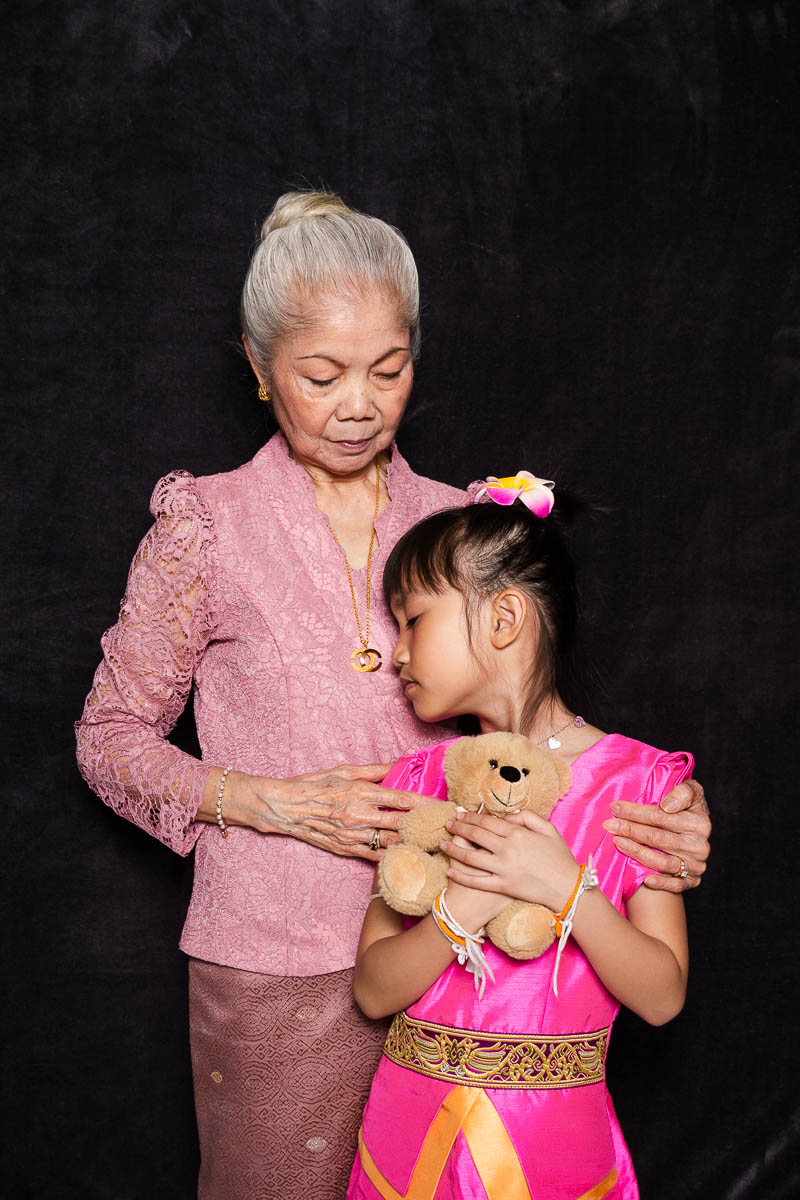
Nhay Thongthi
Pictures taken in:
From:
Nationality:
Photo and interview by:
Before war came to Laos, Nhay (73) had simple dreams: “I just wanted to have a good family, take care of my mother and younger siblings, try to work and earn money for the family, and be happier, to work.” Before she was settled in the US, in March 1980, she had to stay three years in a refugee camp in Thailand. “In the camp – was hard. Hard, very hard,” she says. “I just wanted to get out, to have a new life.” Eventually, Nhay and her family were selected to go to the US. Transitioning to their new life had its challenges: “I didn’t know the language.” Adapting to the food was difficult too. But she was happy to be out of the camp – happy for herself and her family, and the prospect of having a “better life.” And life in the US, she found, was very different from the refugee camp: “I was happy, the happiest. A new life, a new job, to have a house and a car, a better life. I’m very happy and proud.”
full interview
Okay it’s recording I will put it right there next to you. So um can you share ah where you are living now and who you are living with
Oh right now I’m living with my daughter and ah (untellingible).
Ah hah yep and do you live with other family members too?
Before?
Right now.
Oh, no.
(Ao, who do you live with, with your child and who else?)
Oh.
(With daughter)
Yeah my daughter, my son-in-law and my grandkids. I got three grandkids, oh I forgot.
(Yeah three grandkids that lives here, you don’t have to remember)
Three grandkids and one boy, three girls.
Oh, okay, yeh. And so um, How do you spend your day now? what do you, what do you do during the day
(Everyday after you wake up what do you do?)
What I do in a day I get up and I just go downstairs to find something to eat and I relax, watch TV, and have fun with my grandkids.
Oh, okay, do you have any particular hobbies or things that brings you happiness and joy
(What do you like to do, like you like to sewing?)
Oh my happiness I like sewing and fixing the clothes, sewing another thing to make myself busy.
Oh okay yeah, Do you do fun things outside?
Yeah sometime I take my grandbaby to go to walk around neighborhood, sometime I take my grandkids driving go to the park.
Oh, okay, good. That sounds really fun, actually.
Yes.
Yeah, and so, um, how about, um, before you came to the United States, so what year did you come to the United States?
Oh, before, back home I lived in Laos?
(What year did you come here?)
What year come to United States? Oh I came to United States in 1980.
Okay, and can you share why you came to the United States or how did you get to the United States?
Oh, when I came from Laos? Okay, before I live in Laos country back home, something happened in the country. It’s not comfortable to stay there and that’s why it was skipped out in the Mekong River, go to Thailand and we live in a camp Thailand in nongkhai camp, Thailand. I lived there for about three years, after that I got interviewed come to United States and after that we have sponsored in United States and our sponsor lived in South Dakota and we got sponsored over there and we come to United staes in 1980. And March 3rd yeah March 3rd 1980
Oh yeah that’s a long time ago.
Ah ha, 47 years already.
Ah ha yeah, when you were in Laos what were you doing there?
What I do there for living?
Ah hah
I work for France, cause I cooking for the French. I’m cooking for the French family and because French families are army families they come to Laos you know for the-
(Embassy)
Yeah, embassy, yeah, that’s right.
Okay, and so, um, you cook. Would you like to share what you experience in the refugee camp? How was that?
Ah, I don’t know what to say, stay in there kind of hard, you know stay in the camp, you cannot go out and if you want to go out some to buy something out of camp, we have to have the ticket.
(A permission.)
Yeah permission for the tickets to go out, for the camp that provides something that you want for a family or clothing, some kind of food yeah. They allow you to go but we have to have some ticket, you know.
Yeah, so you’re controlled, you’re restricted from the camp.
Yeah.
And so, thinking about that, um, what do you feel, thinking back?
In the camp was hard. Hard, very hard.
Yeah, so, it is hard and so what are the feeling that come up for then when you thinking that it’s hard.
To me everything is hard, I want to go out there okay because I have mom, my sister, my brother, my husband. I’m ready to come you know, any country if they want to sponsor us to go I like to every country, but I’m so lucky.
-crying-
Yeah, it’s okay, it’s okay. So what are you feeling right now?
Thinking about my…miss brother, miss my mom. Cause a lot of things you know, come to your life, very hard to control you know, hard and think back home.
(You can speak in Laos and I’ll translate)
Okay.
(What made you feel, tearing up when you were in camp?)
There are a lot of thought.
(She said there is a lot to think about, but what makes you tear up, something that you thought. So I said that when you think about it, you know, it just hits you in the heart and soul that makes you cry, what is it? You can speak in Lao.)
It’s hard to cross from Laos.
(Really poor.)
Came to camp was also really hard, back at home we have a house; when we cross over it was hard in the camp, I was also imprison.
(Left her home, left everything right and then we cross the Mekong River, actually in the middle of the night they have to sneak out it’s not like you can really come, and when we came we actually went to jail, the Thai authorities met with us on the border and at the other side of the river and they like okay we gonna take you but you have to go to jail first, it wasn’t straight to the refugee camp.)
How did you get out of the jail?
I was in jail for one week, before they let me out.
(It’s a regular procedure. I guess some people didn’t get to jail, but I mean we had to stay there for a week. Yeah, It was a regular prison, actually. It was a literal jail prison. It’s, um, for the hardcore criminals. Yeah, they separated like I was with my mom and you know the women were together in the area, it was a week before they released us to go to the camp.)
When we got out we stay in camp, another small camp.
(Oh, which one?)
Sor Kor Thor.
(Oh, so they took us to another smaller camp beside the big one so it’s called sor kor thor. Why?)
Sor kor thor, I don’t know because coming to big camp they don’t have a house for us to stay.
(Oh, cause they didn’t have any place to stay at the big camp.)
Have to stay there for one month.
(We stayed there for a month, a smaller camp, temporary until they found a room for our family.)
They set up a house there.
(So we’re family of, we were my mom, my dad, myself, my grandmother, my uncle – two uncles and two aunts, 7 of us total.)
We stayed there for a month and then left to stay at the temple, when we got in the camp we got to stay at the temple pavilion.
(After we came to the Nongkhai camp, they have to stay at the temple first, in there there’s like a temple, sort of like we stay there first because they don’t have a room for us yet.)
We stayed there for a month.
(A month we slept on the floor, it was open, it’s just cement.)
Dead people were also left there.
(So even though somebody pass away, you’re in the same place, as them as someone who’s decease, cause there’s no place to put it cause it’s at the temple but you know at the temple there’s just all open space, right? So houses is all in one place so like one section is where somebody has passed they put them over there, and another section here for live people the real live staying there temporary. So you kinda have to learn how to live with it.)
So, does she remember that what she was feeling as she’s going through this transition again and again and again?
(When we came we had to be patient, how did you feel?)
It felt painful, difficult I didn’t know what to do, I didn’t know where to go.
(She said it feels, um, ah what’s the word like hurt, it overwhelmed you, you feel like there’s no way out, you feel traps but you don’t really have a choice you know you just feels really suffocated um but you just have to continue thinking like oh theres like life.)
I don’t know what’s gonna be like staying there, I didn’t know how to live I didn’t know what’s gonna be.
(And at the time she said, unsure as even though we’re here, we made it, alive, we’re at the camp, but seeing how everything is, it’s uncertain what’s it gonna be like, how hard it is gonna be, what kind of life are we gonna have living there at the camp it’s the uncertainty that we have no idea, so we left everything thinking that we will come to a better place, then the place that we came to was way worse than where we were, right, and so it’s the uncertainty that almost second guessing the decision was that a good decision or not to come, I think.)
So, I hear one of the ways that she coped through that was to have hope, how else did she cope with that? What are other thoughts or ways?
(You know there are hope that it would get better, but did what did you do or what did you say to yourself to help you stay?)
Before, I could stay because there were a lot of countries that took people. America also took people, France also took people, Canada also took people, China also took people, and Germany also took people. A lot of countries were taking people and they let us choose which country to go to.
(So beside there’s a lot of fact during that time that willing to take in refugee, right, the US, France, Germany, Russia, Australia, Canada I mean everybody was taking in refugee that time and you actually have a choice which country you wanna go to.)
Yeah, so many country.
(Um, some people, they’re like, anywhere in the US, sign up, and they have preference and do let you choose.)
Did you choose which country?
I choose two country, France and United States.
Oh, okay, you choose France and United States and of course you got Unite Stated.
Yes.
Oh okay.
(Well, actually, we got France first.)
Oh.
(But we weren’t ready, cause we were trying to get more family to come on my dad’s side. We got a call to France first, right?)
We were on the list, but they stopped taking people because they had already taken a lot. They stopped.
(The France was halt at the halt of taking in.)
Because at that time they asked, who was working with the French, who were the army students.
(So they asked if you ever had any contact working with the French Embassy in Laos, or like if my mom cooked for them. And then my dad, he was in the army, and during that time the French were overseeing Laos too. So, anybody who was in the army or worked with the French Embassy.)
Was the student or cadet.
(Student, like a cadet not quite in the army. And then they would take those people first.)
Yeah.
(But the thing, there were still so many that had to wait.)
They called it Level 1 and Level 2. You know, District 1 means you had to have a connection with them, and District 2 means you didn’t want to go. But the old army, like the old French, they also had District 1 and District 2.
(They lived in Laos, like Level 1 and Level 2. Level 1 means you wanted to go, like you had a certain connection. For example, in Laos you were working with a French person, or a French family, or the French army, and then they would take those people first.)
The US also had Level 1 and Level 2 as well.
(Even to the US too.)
I also worked with the US once, helping a cousin with housekeeping and cooking. I used to help them, but not for very long.
(And then over to the US too, if you worked with anybody who’s like gone over there. And my mom had too, Laos worked with the American and some others too, for a while, as housekeeping or doing cooking)
Cook.
Oh, okay. So then, um, how long did you stay in this whole time before you leave?
At the camp? Three years. Yep, 3 years.
So, before you had to go to the refugee camp, what was your dream for your life? So I want her to then repeat, “when I was in my country I dreamt…” When you were in Laos, when there was no war, what were your dreams? What did you want to do in your life, what did you want to be? What were your dreams, how did you imagine living? I want you to answer like this: ‘When I was in my city, I dreamt of… I wanted to be this, or have a life like this.’ But you have to start with, ‘In Laos…’
You said it?
(You have to say it, in Laos.)
Oh, in Laos, what was my thought?
No, in Laos, my dream. You have to say, ‘In Laos, my dream.’ You have to say, ‘In Laos, my dream.
In Laos, when I was in Laos and there was no war, my dreams weren’t a lot, just normal. I just wanted to have a good family, take care of my mother and younger siblings, try to work and earn money for the family, and be happier, to work.
(So her dream back in Laos, it’s not much. It’s just to have a job, a happy family, and just to have enough to eat, and be happy and peaceful, like a nice quiet life. That’s it, nothing much.)
Okay, so then, um, you come here to the States, North Dakota.
(South Dakota.)
South Dakota.
Ah, South Dakota. And so, um, you come, and so what do you experience now over time? What experiences do you have, like how do you adjust to the new culture, life here in the United States?
Oh, when I first came here it was difficult because I didn’t know the language. But I was happy because I got to get out of the camp, for my children, myself, my younger siblings, and my mother to have a better life. I was happy, the happiest. A new life, a new job, to have a house and a car, a better life. I’m very happy and proud.
(So when she first came to America, we were just relieved and happy that we were able to leave the camp and actually have an opportunity to come here to the US. And when we got here, the sponsor gave us a home, gave us a new life, gave us a whole family.)
They had a home for us, they had everything, and they loved us. We were the only Lao family there.
(So we were the, um, the only family in that city that was Lao. Even though we were the only ones, we were grateful that we were given the opportunity to have a life again and given the chance and opportunity to make something out of ourselves. And the goal was to come here so that me, myself, the kids, and my younger brother and sister could have a better life and have an opportunity to have a dream. So it was kinda like climbing out from a closet into open space. And we were lucky that the sponsors were very nice, to give us everything from a house to a car, jobs, everything. They were very loving, they treated us just like family, and they never let go of our hand. And they taught us how to speak English, and, you know, we had no one else to refer to. They were just like family, yeah.)
So then, the longer you live here, um, did you experience any discrimination or prejudice or racism?
(When we were there, since we moved until now, did you ever feel people making you feel prejudice toward you or not liking your nationality?)
I never felt that.
(Not over there where we came, we never have. And when we moved over to Minnesota, we never either. And even moving here to Michigan, we don’t feel like—yeah, I mean, the people that we encounter there always treat us like any other person. It’s just the way it should be. So we never encounter prejudice or anything like that.)
When I went to work, my boss was also nice. It was a good job.
(Work is good, um, all the managers are very nice and understanding, and, you know, treat them fairly.)
So what would you say are the hardships that you went through? Was it adapting to the culture, food, language, anything at all?
(Which one was the most difficult, language or food?)
Both, language and food. Over there we didn’t have our food, just American food. When grandmother came, when my mother got here, she wanted to eat. She cried, said, ‘Oh, I’m hungry, I’m hungry.’ She had to eat only bread, and it felt like there was nothing in the stomach. ‘I’m hungry, please find me some food.’ I didn’t know the language, so I opened the dictionary book and asked where to buy sticky rice. At the camp we didn’t get to study, only Book 1 and Book 2. We studied English at the camp for a little. And now I know more French, but when I got here there was one person who knew a little bit of French. When we got off the plane, ‘Oh là là, bonjour, ça va.’ I was happy because I could talk, because I knew very little English. I studied Book 1 and Book 2, I didn’t know anything. We learned English, right, but not much, not enough to speak. Whatever. The important thing is we wanted to speak, but there was no way. I was very happy I got to speak a little and look for a dictionary, English to French. Oh, that’s all, three words I knew, and I was like, oh no.
(So coming here, the most challenging was the language and the food, because where we were there were no Oriental or Asian stores at all, um, and so my grandmother, and we ate just, you know, just American food, cause otherwise they didn’t really know how to cook our food, and we didn’t have the essentials to cook our food. And my grandmother asked, ‘Please go and buy some rice, can you go and ask to buy some rice? I’m eating bread every day and it feels like I’m not full.’ And so my dad had to go get that dictionary book, where the translation was from Lao to English, and, um, ask the sponsor where we could go and buy our food and rice and stuff like that. But when we came…)
We stay at the sponsor house, right?
(Yeah, we came and stayed with our sponsor at their home. But then when we first came and got off the plane, there was this other person that knew some French. All he knew was, ‘Hi, how are you, are you tired?’ And then my parents were like, ‘Oh, do you speak French? Yay, we know French, right?’ And then we were talking to him, and he was like, ‘Wait, wait, that’s all I know.’ Oh my goodness. We thought we were gonna get a break. But yeah, mainly it was the language and the food that were the most challenging. Our life was different, but we were okay, right?)
We were okay.
(As for culture, we adapted. It wasn’t hard. We went to church every Sunday. There was a mass at church, and they were all very nice.)
All very nice, Korean people, right?
(And they came. The thing is, church had so many who came and taught our family every single weekend. It was all volunteer. They came and taught us how to read, how to spell, what is what. So, you know, they were all hands-on. As long as you know, they were all very nice, yeah.)
So what, now that you have been here, um, in the States, um, for so long—now what is your dream? And so I’m gonna have her do the same thing: ‘My dream is…’
(The same, when you live here for a long time, now what is your dream? What do you wish or dream, but in your dream?)
My dream is nothing, just to live here and have a better life. But I’m also happy and don’t want to go anywhere. I want to stay in the US. I’m very happy I got a new life. I want to stay here and have a better life
(So, as far as dreams are concerned, um, her dream is just to continue to live a happy life and a peaceful life, and that’s it, really. It’s really not much. Since, I don’t see from back then, back then it was a little bit more of hope, right? That was the same, but to continue to live the peaceful and happy life she’s been living this whole time.)
I can go anywhere I want.
(We can go anywhere we like and do anything we want. They have the freedom to do that versus being confined in the camp before.)
Okay, so we’re gonna, um, wrap up the interview. But before we do that, I wanna make sure and double check, is there anything else that she would like to add or share?
(Do you have anything to add or talk about, the story from coming from Laos to living here now?)
When I was in the camp, I just wanted to get out to have a new life. When I got a new life, I was happy, and the sponsor was good. When living here, the people loved us and they didn’t hate us. They took care of everything, and the sponsor provided us with everything. They had everything, even sewing machines. At home there was also a TV and everything was like a home, because at home there were three bedrooms, two floors, three and a half bedrooms, yes, one bedroom. They had everything. When we got home there were a lot of things: beds and a place to sleep, they got everything. There was nothing for us to ask for. Food, water, a fridge, everything. It was good. They didn’t only have sticky rice, but also jasmine rice. My mom wanted to eat rice, and the sponsors bought rice to cook.
(It’s a dessert with marshmallow.)
Ah hah, with rice, when grandma got to eat that she was happy, but it was too sweet. Lao people cook Lao food for you, they cook it like that. I was very happy because the sponsor provided us with everything and even got us sewing machines and everything. They saw us paint our nails and asked, ‘Do you know how to paint nails?’ We used to live in a city, we used to work with French people and Americans, we were in a city. We also had a community, we knew, not like we were from rural areas. Some people are from rural areas, they don’t know much. We used to live clean, eat clean, dress clean, and look nice, not dirty. I like to clean. And the sponsor was like, ‘Oh, you know how to paint nails?’ and went to buy nail polish and nail clippers. They were like, ‘I’ll give you sewing machines. Do you know how to sew?’ I said, ‘Yes, I know.’ Then she took me to buy fabric at the store to make pants and shirts at Joanne, make a dress, a skirt, and everything. You know, they took me to buy it. She was like, ‘Oh, you guys are smart and well-skilled. You can sew and do hair, and know how to paint nails. Your house is also clean—when we got to your house it was never dirty.’ We were happy because we knew how to take care of ourselves. They were not worried. Some people who lived in rural areas, their sponsors had to take care of everything. They sponsored one family, not sure if they were Lao or something, but they were Asian. When they came, even the bottoms their kids didn’t want to wear, no diapers, and they peed in the house. The sponsors were like, ‘Oh, very difficult,’ because they sent them to people in Sioux Falls, in the big city. They didn’t know how to take care, and there were no Lao people to translate. Not sure if they were Lao or what, but I know they were Asian, I forgot. They were very happy we could take care of ourselves. Your father also knew how to drive, and after school he also drove a taxi back home. And I also knew how to drive a car, because back home we rode motorbikes and bicycles, and your father also drove taxis going to places. I also learned to drive with him. I knew how to drive back then. And they weren’t worried because of us, because we knew a lot of things. They were proud of us, and we were also proud of them. We were easy to understand, fast learners, and worked fast. They were happy with us, and we were also happy with them. We got to have a new life. Some people even died at the Mekong River, and others died at the camp. But we got to have a good life here. I’m happy, and they were happy they got us, because we weren’t difficult to take care of.
Can you?
(Yeah, so basically, um, Mom, she’s just really happy that, um, looking back from Laos, the hardship to even leave Laos, then go into the camp, stay there for those many years, and only get to leave and come here, we’re just fortunate that we had a really good sponsor. Actually, the whole church sponsored our family, but there was one designated family that took us in. And, um, they provided everything. They actually did their homework because they knew that my mom sewed and she knew how. So we got a home, it was completely furnished with everything, refrigerator. So we stayed with them for how long?)
At the sponsor’s home? Maybe three weeks.
(Really? And about three weeks we stayed at their home.)
Because they didn’t want us to come right away. They thought we couldn’t live on our own and were scared. They wanted us to stay there and feel safe first, and to rest first.
(Right, so the house that I was in, they had already found us a house, but they didn’t take us in right away. They wanted us to stay with them for three weeks first, to kinda get used to it, to the environment. And when we went there, we did everything. For me, clothes for me, we all had clothes, a bunch of clothing. It was furnished, and we were like, wow, you know, this is all for us. And food, every single weekend the church brought boxes and boxes full of groceries for us, because we didn’t know how to go get groceries yet. They brought it to us every single week. On Sunday we would be at the church, and they were very, very helpful. We were provided for. And then compared to other people, to the unfortunate ones, they made sure that we were on the right track. They were surprised at some of the things my mom knew how to do, because they thought, okay, in a third world country, if you live in a village, what do you possibly know? But then they realized, okay, my mom had been living in the village but she was working with the families of the embassies over there, right. So she learned that you need to be a certain way, and how to socialize, and how to present yourself properly, such as wearing nail polish, or knowing how to perm your hair or do makeup, and, you know, dressing up, not just only the regular clothing. My parents, they went out and socialized a lot when they were over there in Laos. And as far as driving, both my parents knew how to drive since Laos, so when they came here and got their licenses it wasn’t very hard to do that. So we, I guess, adapted well due to the experiences they had in Laos. But the only thing is that, again, because we feel very fortunate, when we came here we were just so well taken care of, and it was what we had hoped for, but way more. We were hoping to have a good life, but what they provided was more than what we asked for. Yeah, so overall, for our family, it was a good experience.)
So, um, one last question that’s coming to my mind is, um, you know, she is the oldest in the house and then she took the picture with the granddaughter, that’s the youngest in the house. What does that mean for her?
(You took a picture with your granddaughter. You’re the oldest in this household and she’s the youngest. When you took the photo, how did you feel?)
I feel happy. What I mean by feeling happy is that I got a new life. At this age I also have a granddaughter. I’m happy and I’m proud that I got to take a photo with her and still be alive, and have lived long enough to take a photo with my granddaughter.
(She feels very happy and fortunate that she is able to survive up to this age, which is gonna be 73, and, um, she is able to stay alive and live a long life to be able to see her grandchild at that age. So, um, it’s something that you have to be thankful for.)
Yeah. Yeah, that’s beautiful.
Okay, is there anything else you would like to share before we come to a close?
(Still more? We’re finishing. Can you think of anything? If finished, then okay.)
Talk about jobs. I worked at one place.
(Um, yeah, as far as jobs, my parents worked for this company called Control Data in Aberdeen. And then they closed down, but their sister company, Seagate, was in Twin City. But what they did was, because my parents were such good workers, they had, um…)
Transfer.
(Transferred them over to Seagate, and they got to keep the same salary, their vacation, and their pay and everything. So to Minnesota, that’s how and why we moved to Minnesota, it was because of the transfer over there.)
They closed down and they took it overseas. The headquarters was in Minnesota. Before, it was Control Data, and then they changed the name to Seagate.
(So when you think about it, they have been in the same company since we came to the US until they retired from it.)
Wow.
(Looking, and um, from job to job, it was all the same company the whole time.)
Lucky. They paid for moving.
(Yeah, they paid for moving expenses and everything, so that was really nice of them.)
We got paid from there to here, and they gave a lot.
(So they stayed, and everything stayed the same.)
That sounds wonderful.
Because the pay in Aberdeen was small, and the pay in Minnesota was a lot, we moved here in 1989, right?
(Yeah)
It was ten-something in Minnesota. Over there it was not nearly that, okay.
(Yeah, so they were working in Aberdeen. They, um, they had like the capped pay already for what they were doing, like we couldn’t get any more.)
For nine years.
(And then, um, the top pay in Aberdeen, because we were there since the last, they got like about 10–11 dollars back then. And then when we moved to the city, the living expenses were more, so they gave them the top pay there.)
Good.
(So, you know, it was really lucky that they did that. They didn’t have to, but they did.)
At first I was gonna go to Tampa, Florida. They also had a company there. We were gonna go there, but my boss wouldn’t let me go because in two years they were going to close down. The boss wouldn’t let me go because they loved us and wanted us to just go to headquarters. If we went there and then in two years it closed, the headquarters could be full and they might not take us in. So the boss wouldn’t let me go and told me to go with them, the section manager personnel.
(Yeah, so the personnel, um, told them there was another place in Florida that they wanted to go, but I don’t recommend you to go because they’re gonna close down in two years.)
I wanted to go.
(Because they were, ah, the weather is better, but job security is a thing. In two years they’re gonna close down, so in two years we don’t know if they will have room for you over here. And the city, they said you might as well just come to the main place and stay here in the Twin City, but…)
Compitas, I take care of you. They said if I stay there and don’t like it, I’ll leave you there until you retire. That’s what they said.
(So they always had, like, a connection with people they worked under. It’s because they’re hard workers, you know, and dedicated, and they take their job seriously. So, a great work ethic, and that’s something that upper management really saw and valued. So there was always a job for them.)
Thank you so much for sharing. It’s so good, thank you.
Yeah.
Thank you for everything.
We stayed in South Dakota for nine years, right? 1989. It was hard to live too, but we had a house in South Dakota when we came.
Many 1000 Dreams interviews were not conducted in English. Their translation has not always been performed by professional translators. Despite great efforts to ensure accuracy, there may be errors.