





About Refugees, By Refugees
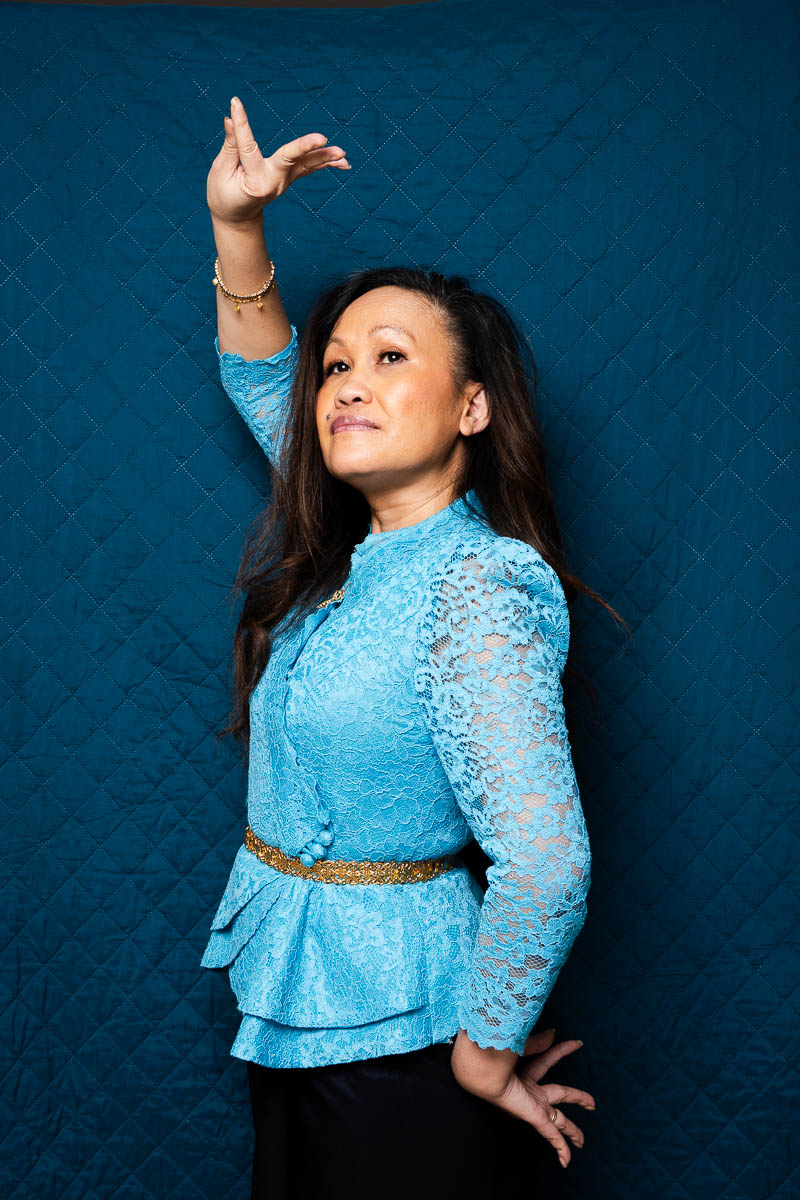
Vanhny Siboura
Pictures taken in:
From:
Nationality:
Photo and interview by:
“My dreams is to have Lao Helping Lao,” says Vanhny Siboura (53) from Laos. “We’re stronger together.” Vanhny was seven when she escaped war in her home country. Her family settled in Michigan. They struggled at first. She says her parents “can’t probably give me the material things, or whatever it is that the children need… but… they risk their life for us to have a better life.” She says the trauma has “never been fixed,” and, “even though it’s very negative, I found positive things, and that’s how I kept going.” Vanhny says that her community has been voiceless, and that people think that refugees “take everything that people have.” She rejects and often corrects these assumptions. Despite being an American citizen for decades, she notes how she’s treated differently: “Like you’re not American enough, you know, you’re not doing enough.” But, she says, “I’m eager to wake up each morning to find a solution for what I’m doing. I don’t have time to think if I’m hated.”
full interview
What kind of housing do you live in and who do you with?
I live with my husband right now because I’m an empty nester of two girls. They all have jobs. So I used to live with four people, now two.
Now two, just you and your husband.
Mm-hmm.
Girls are all gone.?
Gone.
How does that make you feel?
I feel… I feel that I… Did my job, that I always wanted be a mother.
Mm-mhm. How do you spend your time here?
I spend my time in Michigan.
Just in where your… where you live, where you work. What do you do for fun?
Okay, so because I found a passion that uh, do a business of, business of Lao Helping Lao. It’s been 15 years and counting. Two years ago, I started an LLC. And that’s consuming a lot of my time because I’m very passionate about that because I really find myself now, because I’ve been giving myself to my girls. Now, this is for me, so I wake up each morning, eager to solve a problem to a solution and I feel that I can live like that forever.
Well congratulations, I think that’s very admirable. So how does it feel to be a business owner?
Very exciting, yet exciting and also exhausting, but what I find out that because I’m the only one that’s doing it- that’s the hard part- is that everything else is gonna depend on what I come up with. What’s great is that I’m meeting people like you, people that is paving the way. And that’s what I need to feel to do this of my, like you know I told you before, it’s not just a 15 years, but since I was 16 years old.
Mmm.
So I’m trying to find somebody or a group of people that is like-minded. That’s gonna make this happen, because it’s the first thing. It’s a prayer for Lao community. And I know you do refugees, which is,we are refugee as well but, but I think because you’re a Lao American, that’s what connects us. And I wanna find more Lao American because we… we’ve been silent for 50 years.
Yes, we have been silent for 50 years and now it’s our time.
Yes.
So. How does that make you feel knowing that we’ve been silenced for 50 years and…
Because I know from experience, because even for me, I just started to have a voice.
Mmm.
I didn’t have a voice before. I was too scared or didn’t know, like I said, somebody like you that has the same ambitions of helping the community and… because we’ve always been shunned by our own community. And so that’s why it’s…
Yeah.
It’s why, it’s why, it’s like try to overcome that like… the voice, not to listen to, to that voice saying that you can’t do this, you’re crazy, nobody’s gonna nobody’s gonna do what you want them to do which is better themselves – which is unreal. Right?
Mm-hmm
So that’s trying to not listen to the people. Which I thought, you know, the people that we care for are saying this.
Right.
To us. So that’s… that’s the strong stuff that I need to have, or else, are we gonna believe that you can’t do it? Stay in your place, be invisible.
Mm-hmm.
Yeah.
So you mentioned that you… that it was difficult not having a voice, and now that you are, how does that make you feel to be just starting this out? You mentioned that when you started this out it was just you, and now that you’ve met other people along the way how does that make you feel? Now knowing that there’s some kind of movement if you will.
Right, yeah a fuel because i need those that fuel which was empty.
Mmm.
For a long time because you’d need some kinda health right? Some kinda gas to ignite that fire because I do now that I know that I’m not crazy. And that it’s possible. And the people that are willing to hear and connect will be in this movement with us. And I know that for sure now. Instead of feeling: “oh, nobody’s gonna hear you. You know, you’re crazy. There’s no way”.
Can you talk a little bit about, just a little bit more detail about this movement that you, um… that you foresee.
The movement I see in the future is that because Lao Helping Lao so I can, is that I see mentorship, my vision of just helping wherever it’s needed, the skills that we have formed for me, which is, you know, I told you before, it’s like that, 25 over 25 nonprofit. To use that skill to better the Lao community all over the world. And I know that people that I meet along the way have other skill that I don’t have. And then the more people I collect, the more skills and mindset of… of getting this done because I cannot do it myself because of my skill set is limited. Whereas other people when I see is like, oh my gosh, you’re a brilliant grant writer, you’re brilliant connector. I need that in my team and my vision is that just come together see what we need, you know what skills do we need to get move this movement going because if we don’t have each other and if we don’t help each other, and the people that I’m meeting is like: we want better our Lao community and be seen.
Mm-hmm.
That’s the ultimate goal, so how are we gonna do it?
Mm-hmm. Can you tell me how this work, or why is it important to you?
It’s important because I know I don’t live forever and that we need to just by us coming here is the wipe out of the culture and that, we once have and to even learn about other culture when somebody, the dominant culture… want to dominate and don’t want to see the minority, they do the best they can to teach them that you don’t need that anymore. You don’t the language. You don’t need the culture. You come with us. You blend in, you assimilate, you do better. But what I know for sure that having those two is gonna be even greater… world. Instead of having one to go by one massive umm, culture and that, that the unique culture that we were born in we didn’t choose it but we were born in, and that people um, tried to steal that because the.. of a power or whatever the reason there is. I found it’s really sad to not just allow community but a, a unclear community that… um… that has culture, but people are threatened by that.
Mm-hmm.
You know, and so they’re like, no, speak English. No, dress and… “where is your suit?”
Right, right.
Right?
Right.
See, that’s very important to me is that I even, even allowed, you know, I even have ethnic background that… that I need to learn because it’s been erased.
So you mentioned that it was… um, that, that people would tell you pretty much how to act, how to be um, pretty much anything but who you are. How does that make you feel to have somebody tell you that?
I thought it was normal because to survive, right?
Mm-hmm.
For me to be heard or, or seen is to be like them. That’s what, the messed up message that I got.
So you believed it?
Believed it.
Okay.
Yes.
What do you believe now?
I believe that our uniqueness is that we’re going to bring people to see the world. The dimension of different thinking.
Mmm.
To understand the world much better. If you think the same all the time inside the box, you’re never gonna have a scope of the world because, you know, because we say flat, the world is flat, like boom.
[Laughter sound].
When the world is round, we kinda like a lot of dimensions. Keep, again, back to the movement.
Yeah, yeah so you mentioned that you started your LLC when you were probably 16, I believe.
Like in my mind, yeah.
In your mind, right? Right?
Yeah.
Umm, and at that time, you know, you felt like, if I’m correct, that you were alone.
Umm.
That there was nobody else.
No.
You couldn’t find your community. How did you overcome that? How… what made you keep going to… from when you are 16 to now? What kept you going?
I feel that if I keep going what I believe, I would feel that my uniqueness is there without blending in with the mass. Because the fight to find myself is another word. A fighting by fighting to find my self is Lao culture. Not only that, it’s like the ethnic group in the Lao, because I know my parents are mixed with everything. Lot to learn.
What are some of the things that bring you joy, make you happy?
Yeah, I think bring me joy is basically have the, help somebody to become who they’re supposed to be. ,
Mm. Mm-hmm. Mm-hmm.
That’s bring me joy.
Can you tell me how your life has been since you arrived?
Would be some kind of lost, but then found.
Lost and found, okay.
Been lost and found.
Lost and found. Can you elaborate a little bit about what that means?
I think because we take it for granted, United States give us the power to have that voice and a lot of country, including Laos, doesn’t give us that.
Mmm.
I think we take a lot for granted.
Mmm.
Of the gift that we have in here.
So you’re grateful to be able to have that voice?
For sure. For sure. Because even though I thought I didn’t have it, I think because of the training.
Right.
Of where we come from.
Right.
Because our parents have been trained like that.
Mmm.
So I think overall, you look at how great America is.
Right.
That’s why LLC exists for me.
Can you just explain how awesome that makes you… like, how does that feel to finally be like, ‘I have a voice’?
Yeah, it’s powerful. And what’s great is that this LLC is who I am.
Mmm.
Who gives you that? But the United States, right?
Right, right. Yeah, you know what you mentioned that some of the good things are being able to have a voice, being able have an LLC. Can you share with me what’s been difficult for you?
It’s difficult because I think we’re still in the toxic of ourselves, our family, then to our community, because it’s all related. Because of the trauma that is never been healed. And, and we’re trying to fix that trauma that we were never fixed ourselves. That’s been very difficult to acknowledge that, “hey, Nii, you need help”.
Mmm.
You have some kinda illness that never was treated. And then what I found out, the whole community. The whole country.Yeah.
It’s never, it’s not healing.
Right.
And that’s a difficult part is like, I can’t do it myself.
Right.
Now that I know that it’s, that’s the issue. It’s like, it is that trauma and the illness that we have in the toxic umm, including our family.
Yes.
And that is the hardest part to accept is that somebody whose supposed to be loving you, is that giving you that toxic, which they don’t do that on purpose.
Right.
I’m not blaming them, but it’s the whole… the whole situation with Vietnam. It caused them to the war.
Right, Right. And so that’s, you talk about, you know, internal trauma that we’ve kept because of the war and how that trauma is passed on to children, such as your parents passing on to you.
Mm-hmm. Yeah to our children now.
And now you’re, now we’re talking about our children, right?
Mm-hmm.
Umm, how does that kinda make you feel knowing that this trauma is still passing on?
I think, I need to be healed fast. You know, so now that the realization is there, it’s my responsibility to get that healing because before I didn’t know that that was an illness, first of all, didn’t acknowledge it. Now I know better, so I can’t, I can’t have excuse to say that, oh sad, it was a war, it is my parents, no.
Mmm.
Now that you know that that’s the issue, you need to get… you need to get help.
Right, Right. Right. How do you think the, you know, our community, um, has handled this trauma so far?
Not good. Not good.
And why, why do you say that?
Because now that I’m going back to the community, it’s the same thing.
Mm-hmm.
It’s the same thing, meaning-not acknowledging that they have a problem.
Right. Right.
This is… Right?
Right.
Not it’s a same thing that my path went through. They not… I know where the, the stage is, because I have a stage for myself.
Mmm.
And I know that they’re not there yet because I’ve been there.
Mm-hmm. Mm-hmm.
And my my family’s still there.
Right.
That’s, that’s the.. that’s how I could compare.
Right. So, pretty much you’re saying that it starts, as far as change, starts within ourselves first.
Mm-hmm, for sure.
Right?
Mh-hmm.
And it starts with you.
mm-hmm.
Does that give you, how does that make you feel though to finally realize that that was probably aha moment? How did you feel when you figure that out?
Well, the LLC start.
[Laughter sound].
Lao Helping Lao start because I know that if somebody come to me, I exactly know where you’re at and, and all I could do is give you the resources you… your… because the people that come to me, they already acknowledge what they need and what they’re doing. Right?
Mmm.
And if they’re not then, then I want be that person to consult with them on where they’re at because I can’t change anybody. Right? I’m not here to change anybody, but I could let them realize this for myself. Umm, like acknowledge like where are you in the stage and where you want to be. Right? So it’s up to them, it’s not up to me.
Exactly, I love that. Have you faced any discrimination or stigma?
Oh yes.
And if so, can you explain how it impacted you and describe it a little bit?
Cause I feel like I’m always the only Asian. I feel I’m the only Lao person in a room. And the people in the room don’t understand where I’m coming from, so I stop saying things because they don’t understand. Because I don’t want to be labeled as like, I’ve been… I’ve been actually in a leadership in a predominantly white community, they… they think I’m crazy, [loud laughter] you know, the way I think, for them to have incident by incident, for them to attack me in front of people, either by a principal, by parents. It’s actually happened, it’s not in my head. They actually attacked who I am.
Yeah, so you felt you…
Yeah I…
You felt attacked?
Yeah, that
Okay.
Being who I’m is not good.
It’s… it’s not good, right?
No, it because I’m different. So I have to be strong, say, “no, this is who I am.”
Mmm.
This is how I’m gonna solve this issue where you could solve differently, but you trust me being the leader. So this is how I’m gonna solve it, with compassion, with empathy.
Mmm.
With all the stuff that I learned.
Mm-hmm.
From my parents that which they taught me in that love. They can’t probably give me the material things or or whatever it is that the children need, but I… I feel like the love if you leave look deep down it’s like they risk their life for us to have a better life.
Yeah.
If you look beyond the illness that they have by saying like the trauma that’s never been fixed, if you look at their action of what they actually did.
Right.
That’s the best love they know how is for us to get out the situation.
Right.
And come to this land that now that I could have an LLC, you know what I mean?
Yeah.
So you have to be strong enough to realize all that instead of just blaming..
Right, right. So instead of blaming, you have to find the strength from within.
Mmm.
Is what you’re saying.
Mm-hmm. Whatever that is, because some people, you know when people talk about unhealthy, like talk to yourself, listen to yourself. What if you’re unhealthy? You can’t listen to them.
Right, right.
You can’t listen to your unhealthy self.
Mm-hmm.
Right? Right? So, so it’s hard. It’s very hard.
yeah. So what do you tell yourself to, to kinda hush out all these naysayers that call you and stereotype you, whatever. How do you overcome that?
Because I basically do action more than talking. So if my action have the reaction I need, whether is… whether it’s an improvement or a better life or whatever, better communication. If I see it approved through my action, that’s when I, I don’t give up, because it’s actually work. It’s not reading from the book or or just assumptions you have you know.
So you don’t give up, you keep going.
Action just just do more action.
Yep keep going pretty much and…
Yeah.
And do more than…
Yeah.
Saying…
Than talking. yeah.
Yeah let’s all talk.
Just do it, just do it.
Right, right.
Because if you have nothing to show for that means you’re not true to what you’re saying it what you saying you gotta match your action.
I love that.
That’s how… that’s how I judge people.
I love that. I agree.
Mm-hmm.
How do you think refugees are perceived in this country?
Nobody, no voice. They… they feel that they feel that they take everything that people have. I feel perceptions like, you know, like, or like, “oh, they don’t pay taxes”.
Mmm.
Things like that, you know what I mean? Like kind of like have assumptions, but it’s all false.
Right, how does that make you feel when people say that?
I just correct them.
You just correct them, but…
{Loud laughter} I just correct them, it’s like no, no we pay taxes.
So you feel that you have to correct them.
Yeah. Teachable moment.
But ultimately…
Teachable moment. That’s how I call it.
Ultimately though, how did that make it feel though, knowing that somebody’s put these assumptions on you?
Mm-hmm, like I said, I… I need to meet them. I need to show my actions. This is my life. This is what I’ve been doing in the United States. Not just the Lao community with my community.
Okay. So you feel like you want to educate people instead of getting angry
Mm-hmm.
For example. You want to make a difference. Instead of just…
Mm-hmm. Show the receipts.
Yes. Okay.
So they can’t say anything.
Right.
Like you’re not American enough, you know, you’re not doing enough. I’m like, okay, so this is my receipt so…
Yeah. Can you tell me do you feel safe here in the United States?
I think if I do what I’m passionate to do, I don’t have to think about the fear.
Okay.
I don’t think about the fear. I don’t watch news that much.
Mm-hmm.
So but if I’m eager to wake up each morning to find a solution for what I’m doing. I don’t have time to think if I’m hated.
Yeah you don’t have time for that. You’re just ready to do the job, do the work.
Yeah.
Do the necessary work.
Yeah, yeah. So I don’t have time for thinking about that.
Gotcha. Do you feel that the perception of refugees and migrants has changed over time? Or been pretty much the same?
I think, uh, I wish they would, they would learn from the past about war, but it is obviously is repeating even discrimination with black and white is still there and so it’s it’s yeah it still consists of whatever the issue was in the past when you based on hate and discriminatory is still there.
Mm-hmm. It’s still there then.
Mmm.
Do you feel more or less welcomed than in the past?
In the past, I was a child. I didn’t know any better.
Okay.
So I can’t even compare.
You can’t compare. Okay that’s fair.
Mm-hmm, because as a child, you, you just… you just go along with the flow and if they hate you, then you don’t even know, because you don’t even speak the language.
How do you feel now?
As an adult?
Do you feel.. as an adult, do you feel welcomed?
Hmm.. like I said, I could do my LLC. I could whatever I want. You know. It’s just that freedom. I just do it and because I could do it, I feel like I’m able to whatev… welcome? I don’t know. I don’t have time to think about who’s judging me and don’t want me here [Laughter sound].
Gotcha.
You know?
You just belong.
Yeah, I’m like, I’m gonna make it.
You’re gonna make it happen.
Yeah.
Okay. {Loud laughter].
Like, I’m going to feel welcome. Why?
I love it. I love it. I love it. Why did you leave your country?
Mmm. Yeah, I don’t have a choice. I didn’t have a choice.
You did not have a choice.
I didn’t have a choice and… like I said, this is back to my parents taking the risk for a better… for us to have a better… now that… now that…
For a better life.
Yeah, for a better life.
Mmm.
So yeah, no choice. But now, now I have a choice. So I’m continue on to what my parents gave me.
Mm-hmm. So your parents didn’t have a choose. Can you elaborate a little bit about that? What was going on at the time?
Yeah, I mean, if because of the war, they didn’t go into it, but now that for us as an adult to research it to see what’s actually happening is that they’re gonna die.
Mmm.
Either live or die.
So that’s…
That’s the choice that they had to make was they want to live.
Mm-hmm.
So I want to continue on living for them.
Okay, can you, um talk about how did you arrive to the United States?
Mm-hmm.
Just curious.
Yeah, so I was 7, about when I was escape from Laos, Mekong River, Thailand, Nong Khai, was there for a… for a year with my relatives going to France, we were waiting for them to sponsor us. It never came. The U.S., the Black Evangelist Church community sponsor us, so we couldn’t say no, because we were waiting for the paperwork to go through in France.
Mmm.
But we had to choose. But we think that we were gonna lose opportunity if we didn’t take this arrival from the United States.
Gotcha.
So that’s, that’s why we went with the Baptist Church in Dallas, Texas.
It’s nice, beautiful. Did you think about these events often?
Yes, every day.
Every day?
Because, because my work relates to…
Refugees.
To the refugees, yeah.
Ok.
So yeah.
Is there something in particular that you think about often?
Mm-hmm. Yeah, like, like we’re going to be safe.
Safety?
Like, like, like the people, like similar to me thinking: we’re gonna feel belong, we gonna feel visible, we gonna have mentors, we gonna help each other, we gonna… I have that every day.
Do these past experiences, and I’m talking about when you left the country with your parents, do they affect you today at all?
Yes, yes.
And how so?
Yeah, it’s… it’s like talking trauma.
Trauma. Okay.
As a child and recognizing it now.
I see. So you feel traumatic when you think about these experiences?
Mm-hmm
Gotcha. Could you ever have imagined that you would have been able to handle that situation?
No, no.
No?
Because when I think about not just the traumatized, but everything else with teenagers, issues, marriage issue, parents’ issue, everything, everything else on top of the trauma.
Mmm. Mm-hmm.
It’s like, don’t know how to survive, but I feel, I feel that there’s a purpose for me and I just need to fight it. I just need to fight.
Yeah. So that’s… that’s kinda what kept you going, how you survived it was just continue looking for that purpose.
Yeah, and even though it’s very negative, I found positive things and that’s how I kept going. That’s why I didn’t really like try in the corner.
Aha.
It’s like, even though I have chaotic household.
Right.
I think positive.
Positive.
On that, it’s like okay, you know, either they need me or it’s like, you know some along the line, like, oh, I’m so grateful to have healthy kids.
Mmm.
Instead of like the, you know, one unclear, I was like, they’re healthy. They have eyes, they have nose, they have feet.
So you always look at the brighter side of things.
Yeah.
The cup is always half full.
Yeah, yeah.
In other words… very good. And that’s kind of what has kept you going is by having a positive mindset.
Mm-hmm, yeah.
Yeah.
I have to.
You have to, right? Where do you find that strength and support? Do you find that?
I think being healthy.
Okay. Mm-hmm.
I could trust myself more.
So you find the support within yourself?
Yeah, within myself and then…
That’s impr..
For myself to find other people that has similar issues and like, ah, I’m not alone, I am not crazy.
So community.
Right, yeah. And then helping, helping other people recognize it.
Mm-hmm.
Even though I’m going through the same thing at that time because I’m totally here… heal. I know I’m no totally heal because I know that… I know I have… Until I think the day I die, I think.
Well…
I feel, I feel like until the growth stop.
I know you were a child when you came here, umm when you fled. Umm, can you just tell me what your dream was when you were a child? So, if you could just answer it with before the war, my dream was…
Uhh… before the war, I didn’t know I had a dream. I didn’t know that I could dream.
Mmm.
I… yeah.
Yeah.
I didn’t know I could dream. And then after the war I know that I am working towards something but I don’t know what that is because the freedom now.
I see. Before leaving your home country, what would you describe as your strength?
Yeah, because was so small and so carefree.
Carefree?
Yeah.
Okay.
The carefree mindset of just living. Just don’t have to worry about adult things.
Yeah, you were innocent. You were just a child. You didn’t really have to worry or think about that. Umm, how about as a child growing up in uhh… the United States?
Yeah.
What can you tell me about… what your strengths were at that age?
Yeah, it’s like I had to hold the family together.
Mmm.
Translating, you know, going to brother’s conferences with my parents.
And why was that?
Hmmm, cause they didn’t… cause I wanna give my younger umm… siblings that stuff that I didn’t have.
Mmm.
And I know my parents couldn’t. So…
They couldn’t, can you… can you elaborate why your parents couldn’t?
Because of language.
Language.
The culture.
Mm-hmm. Mm-hmm.
Because I have the two girls, I know I’m not blaming my parents but I know there’s so much that you supposed to be in the kids lives but they weren’t there because they don’t know any better.
So would you describe your strength as umm… somebody who was resilient for example? You were able to find solutions even though you had obstacles like your parents didn’t know how to speak umm… the language, but you still found a way to help your family.
Yeah, I think I don’t I… you know, I… think about all the time, like we’re where the strength and now I mean a lot of women, especially a lot women, we all have the same trait where we don’t know where we got it from.
Mm-hmm.
But we just know that we need to be strong for everybody or else we just all crumble, I feel, I’m speaking to myself now, but…
Yeah.
Yeah.
What you’ve been through seems really difficult and I can relate some of the things that I’ve been through. Do you feel like you have grown in any way as a result of this experience?
Of course, yeah.
Yes, yes.
For sure. For sure, from being a mother, to wife, to daughter, to sister. But what I really worked on is to set boundaries because umm, when other people are not heal and you’re heal, they tend to drag you to be toxic.
Mmm. I see.
Continue on stuck.
I see.
So my boundary needs to be strong on the people that I love now.
Right. So you’ve learned to develop boundaries um from this experience, so you did grow and um, as difficult it was you had to find that out by yourself.
Yes.
Within yourself.
Yes.
Gotcha.
Don’t know where I got that from but I need…
Well, I’m going to have one more question for you. I really appreciate you taking the time to answer these questions. Umm, and if you could, I would love for you to answer, my dream is…, Umm to the question, what are your hopes and dreams for the future now?
Yeah, my dreams is to have Lao Helping Lao to be a movement to see the Lao community helping each other and see our potential and that we’re stronger together.
I love that.
That’s my dream. It’s just, let’s do this together. We’re done with being alone.
Done, right?
Yeah.
Very good. Thank you so much, Nii.
Mm-hmm.
Many 1000 Dreams interviews were not conducted in English. Their translation has not always been performed by professional translators. Despite great efforts to ensure accuracy, there may be errors.