


About Refugees, By Refugees
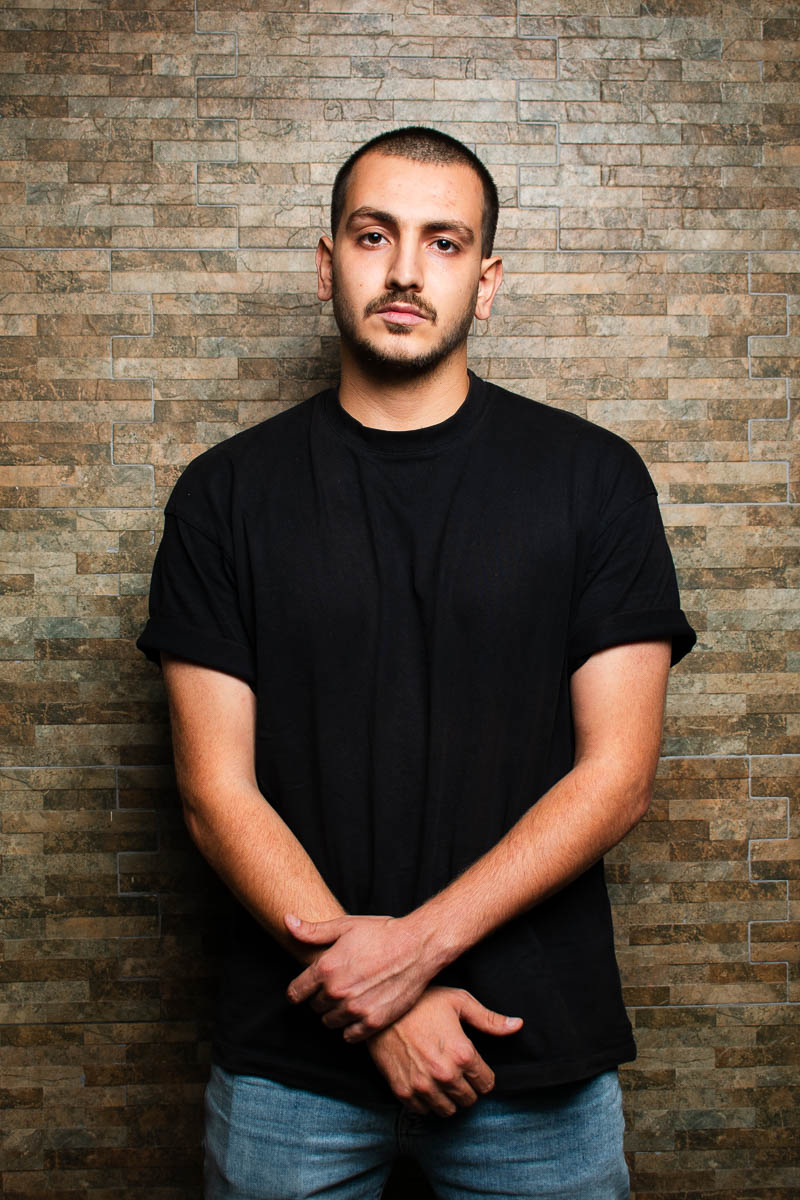
Muhammad Nur Dodok
Pictures taken in:
From:
Nationality:
Photo and interview by:
“My dream when I was in Syria was to become an actor,” says Muhammad (23), a Syrian refugee now living in Turkey. When he left Syria, his dream was just to find a home that would protect him. Nearly a decade later, he still searches for stability: “My dream is to obtain a nationality, and after that, I would like to have my own job through which I can achieve self-realization.” Muhammad fled Syria in 2014 at just 14 years old. “Suddenly,” he recalls, “I woke up and found myself responsible for everything.” He has worked tirelessly to support himself and his family, but life as a refugee is filled with uncertainty, he says: “You always ask yourself what might happen this month because you don’t know what could happen.” He describes feeling lost and without a sense of belonging: “Even here, when you sit with people and gather as friends, if you feel a sense of belonging at that moment, you are at the height of happiness because belonging is something you lack.”
full interview
Hello, may I mention your name?
Yes, of course.
You are Nur Dodok, right?
Yes, I am Nur Dodok.
Okay, first, I’ll explain the project to you because you might not fully understand it yet. The project is called “One Thousand Dreams.” The idea of the project is instead of having an expatriate or a refugee doing an interview with a journalist or someone who does not have similar experience, the project involves someone in the same situation, a refugee conducting an interview with another refugee. So, a thousand stories built on this basis, somewhat like from one refugee to another. The idea is for the person conducting the interview to have a deeper understanding of the situation you are experiencing. If you continue with the interview, it means you agree to use your name, Noor Duduk, and the interview will be summarized into a textual paragraph. The audio will not be used, and only the images will be posted. If you have any questions, ask me. Also, you can take a break during the interview. If there’s a question you don’t want to answer, you have complete freedom not to answer it; you control the interview. Finally, I’ve been trained by the Witness Change organization to conduct this interview. I have a sheet with questions from which I will ask you, and I am trained to take the picture as well.
Okay, initially, I don’t have a problem with mentioning my name, and I don’t mind the pictures wherever you choose to display them. If there’s a question I don’t like, we’ll just refrain from answering it.
Okay, I’ll start with the first question. It’s not written here, butI like to ask it anyway. The first question is, who are you? Other than Nur Dodok.
I am a person who didn’t know what he wanted. In a period of time, I was very lost, literally very lost. Every day I woke up not knowing what I wanted to do. I just lived the day normally, even though I wasn’t happy with it. But, being surrounded by the same environment, everyone is in the same situation you are experiencing every day, this gives you a feeling, not a feeling of satisfaction or happiness with this, but you just don’t have anything to do.
Was that your previous situation?
Yes, at one point, I was like that. At another point, I felt that the most important thing is to work, and as long as you’re improving and comfortable financially, and your family is happy with it, that’s the pinnacle of happiness. This means that I am someone who aspires to work, and he started to find this. After that, family satisfaction comes, perhaps family satisfaction comes first, and then work comes.
I will try to be quick as there are still 20 questions, but I have two comments on what you said about feeling lost. Does this still affect you?
Somewhat. I was in a period of wasting my time, but later on, I realized that opportunities come at their own time, and when the opportunity arrived, I exploit it.
Did you gain positive experiences?
Yes, and that makes you appreciate the value of this matter. When everything is readily available in life, you won’t know the value of things. When you find something valuable, you hold onto it and feel its worth.
You mentioned earlier that the peak of happiness for you is family and work. Does good financial status make you feel happy as well?
Yes, of course.
Do you mean at the current time?
Yes, in our current time.
Okay, I’ll start with the first question. Where do you live?
In Istanbul.
I mean the house you live in. What does the house look like?
Currently, the house is a studio, and everything is in one place.
By “studio,” do you mean a single room?
Yes, one room.
Do you live alone?
Yes
Are there any issues for living in the house?
No.
Do you have any problems?
Currently, I don’t have any problems. The situation is peaceful.
I think the house reflects you since it’s a single room.
When I first moved into this house, I used to tell myself that this house should be mine, and then it actually became mine.
Alright, how do you spend your time?
Yes, I work.
What do you do for work?
Currently, I work in the field of tourism.
How do you spend your time outside of work?
Well, I go out with my friends, and we stay up together. The circumstances usually determine where our gatherings take place.
Are your friends refugees?
Yes, all of them.
Why don’t you have friends who are not refugees?
In the environment around me, everyone is a refugee.
Same situation here. What kind of things do you enjoy?
The things I enjoy are the people I can hang out with, especially since I work, so I like to spend time with people from the same environment.
People from the community around you?
Yes, people who understand you. When you go out, the place doesn’t matter; what matters is that they are with you.
Very nice. Do you consider your friends a strength?
Somewhat, yes.
What are your strengths?
I don’t know; one thing that could be considered a strength is money as a source of power.
No, I want to know your strengths as an individual, not just like anyone else.
Money, friends, and family. If we want to prioritize them, family comes first, then money, and then friends.
Having money gives you comfort or strength, right? The money you have gives you power, correct?
Of course.
This means that you consider yourself somewhat successful in your career and capable of earning money, right?
Yes, Kind of.
Do you work in the tourism field?
Yes. I’ve only been working in this field for 7 months.
Since your arrival until now, what difficulties have you faced, and what positive things have you encountered?
The difficult part is that you have to prove yourself here, and demonstrate that you are reliable in front of your family. They shouldn’t worry about you when you leave home. Being the eldest male in the house, I have carried the greater responsibility since around 2014, and until now. Suddenly, I woke up and found myself responsible for everything.
You became the head of the household.
Yes, somewhat.
Is this considered a difficulty?
Yes, the beautiful thing, which at the same time is considered something bad, is the difficulties themselves and thinking ahead. For example, you overcome these difficulties, but what comes after that?
How does this feeling make you feel?
It gives you a feeling of being very lost.
A feeling of being lost?
The feeling of being lost is very bad because you don’t know what you can do.
How did this feeling become something beautiful?
When you accomplish something, you feel like you’ve done something. For example, when you are very lost, and then you find your way, don’t you feel happy? That’s happiness for me.
So, do you appreciate things more?
Yes, I don’t want to get into the details, but the idea is that I am currently in a period where I am returning to a state of being lost. I don’t care that I don’t know what my future holds, but the problem is that you see the future in the place where you are.
What is the reason for this?
Because you are not in your own country.
So, the important thing here is that you are not in your own country now? What’s the difference?
The difference is that when human beings go through tough periods, they start improving afterward because you begin to find your way. You start working on that path, and it doesn’t matter if it takes a year or two of your life, but the important thing is that you know what’s coming next. When you know what’s coming next, you feel like you’ve been slapped in the face, and you wonder why you’re struggling. You go back to the starting point and return to wasting time. For example, in the country I’m in, after 4 years, you get tired and work on your own, and you have your own business. But after 4 years, you realize that you’re not in your own country, so why bother to contribute to building this country?
Why do you feel that you are not in this country?
Because you are in a place where you only have temporary protection.
What do you mean by temporary protection?
Temporary protection is what you get as a refugee until you arrange your asylum matters. They give you this document that allows you to work, but you don’t know what the end could be. I don’t want to delve into politics.
I won’t get into politics, but I care about the feeling you have. Do you feel instability?
Of course, I feel instability.
Okay, another question: Do you feel racism?
Yes, of course.
Do you feel loneliness?
Loneliness?
You can choose not to answer this question.
Currently, in this period, I don’t feel loneliness.
How do you feel about racism? Is it from someone other than a refugee or from the refugees themselves? The racism I feel is that you cannot be free. For example, in the simplest matters, you cannot travel from one province to another. Can you imagine just for one piece of paper, you could have left your home and the job you planned for the future, and you could have gone to another province where you have nothing, all just for one piece of paper.
I want to clarify that there is a law in Turkey that refugees cannot move from one province to another without permission.
Here, you start asking yourself, “I can’t travel from one area to another just for one piece of paper!”
There is no freedom at all.
Literally, there is no freedom.
This is true and profound. What makes you feel that you are living in Turkey?
We go back to the same word.
Instability.
Instability and being lost.
Are you with your family?
No, I am not with my family.
When did you come from Syria to here?
2014.
It’s been almost nine years. The idea that you left your home and came here, how do you feel? Do you miss home?
When it’s better for you to travel to another country, this thing can be a source of happiness at first. Then, when you are here, you discover that there are difficulties, and you haven’t finished; now you’re starting the difficult journey. When you live through something very difficult, and then something easier comes after the difficult, you will see this thing easier, but it’s still difficult. You will feel disappointed because you expect that you have finished the difficult part, and then you realize you have come back to the beginning and You must rebuild yourself again. I don’t have a problem that when I came to Turkey, I was 13 or 14 years old, but after 9 years, you discover that you are now 25 and still in a state of being lost, and until now, I haven’t done anything.
I understand.
It means that I might go back to ground zero. At any time, any decision could come and take you back to ground zero.
Do you feel a sense of belonging here?
Belonging? Not at all, there’s no sense of belonging at all.
Do you feel that you do not belong?
No. Even here, when you sit with people and gather as friends. If you feel a sense of belonging at that moment, you are at the height of happiness because belonging is something you lack.
Considering that you feel you don’t belong and you don’t have affiliation with anything, how does this affect you?
This feeling cannot be described. Even if you describe the feeling, no one will understand you, so you keep it in your heart. For example, when elections happen in any country and you feel that your opinion could play a role in bringing about change, but in reality, no one asks for your opinion.
Do you feel that you are not welcomed and accepted?
Well, you don’t have another solution than to accept the situation.
I mean, not accepted as in not wanted?
Of course, I am not accepted here.
Do you feel unwanted?
Yes
In most of the interviews I have conducted with refugees, they have the same opinion that we feel unaccepted by society or unwanted, and this is very disturbing. Did you imagine this would happen?
Of course, yes, I imagined it.
When did you imagine that?
Since 2014.
When you first left the war, what was your plan?
In the beginning, we just wanted to live, but after that period, dreams come. At that time, I was planning just to live and find a pillow to sleep on.
Was that the biggest dream for you?
Yes, after that, when you have some comfort, you start thinking about things that are normal to think about, like dreams.
How did you develop the skills, tools, or plans that allowed you to cope with the situations until this moment? As you mentioned, you’ve achieved a simple form of happiness now, including family happiness and financial success. When you reached this stage, what plan did you follow? Did you think logically or emotionally?
It doesn’t happen suddenly. Before that, I went through many experiences until I found the place where I feel comfortable.
Through experience?
Through experience.
Okay, about the skills you have, could you have acquired them if you hadn’t gone through this experience? Definitely not.
Was this experience, despite being bad, necessary in your life?
Of course.
Are you currently very affected by the experience?
Of course, and comfort only comes after facing difficult situations. You won’t develop this mindset unless you’ve been through experiences because you can’t evolve while just sitting at home. You must live through the hardships of life.
Do you feel at ease?
I feel in control.
Despite all the pressures and difficulties faced as a refugee, like any refugee in the world, do you feel in control?
For me, I feel in control and can solve any problem.
Is this considered a strength?
Yes, definitely, and it happens against your will, not by choice. Suddenly, you feel strong in relationships and experiences you’ve been through.
Why did you leave the country?
Because of the war. To improve our living conditions and to look for a safer place.
Did the war affect you in any way?
Of course, it affected me. I lost my friends and relatives, the people I loved, and I came to a place I didn’t know. But that doesn’t matter; what matters is that the place I was in had no safety. Feeling secure is more important than all these things.
Did you feel scared?
Somewhat, of course. Every day we went to sleep not knowing if we would wake up.
How was your journey here?
Through smuggling.
Did you experience a difficult or terrible situation that you can recall for us?
I can’t talk about the difficult situations because I feel it will be a trivial matter. When I start talking about my story, I feel that others are experiencing something more challenging, and anything I say will seem trivial. There are people who have gone through more difficult situations, and that’s why I won’t talk about this issue because, for our people, it might seem trivial.
This idea is very unfortunate for me. Why don’t we talk about your story to people who don’t know it?
When I came to Istanbul, my family lived in the city of Bursa, which is two and a half hours away from here. I had to look for a job and a place to live, and the hardest part was when I was looking for a job, and I found out that my father was also looking for a job in the same place where I was about to work. The employers told him that they would hire me but couldn’t hire my father. This word was very difficult, especially since my father owned businesses and properties in Syria.
How did this word make you feel?
My father, who used to employ people, is now waiting for people to employ him? This was very difficult. They told him that we can hire your son, but we won’t hire you.
What did this word make you feel?
At the age of 14, I saw my father coming down the stairs with a broken heart.
What made you feel that your father’s heart is broken? Focus on your own feelings.
As I told you, my father had authority in Syria. Then, someone comes and refuses to employ him. My father was shattered from the inside. I don’t have a problem if something happens to me, but I can’t bear anything that breaks any of my family members, whether it’s my father or mother. This is very tough for me. I want to add something else: I was 14 years old, and my father was coming down the stairs. I didn’t have a phone. How was I supposed to communicate with him? I did not know where he is going.
How do you feel about the smuggling route?
When I first heard about the idea, I told myself that it’s impossible for me to resort to this route. However, due to the frequent mentions of this route, it became a routine, like drinking water.
Some people consider this route a new thing and are interested in it, but for us, we are used to it, and we don’t know if it’s true or false. It became something we felt was normal. We even started laughing about it; it’s a case of the worst situations turning into a joke.
Unfortunately, the stories you tell me are extremely difficult, and no human can endure them. Some people end up with real problems because of what happened to them.
I mean, for example, when I was young and I used to hear someone talking about these things and laughing while talking, for me, this was unknown, and it’s natural for a person to be afraid of the unknown. However, when I lived these stories myself, these stories became funny to me.
A question crossed my mind when you told me that your father was heartbroken, and this made you feel a terrible feeling. Does this situation still affect you now?
Yes, and I’ve based my work on this experience in my life. I want to build a better life for him.
Your father means a lot to you.
My father and mother mean a lot to me. My whole family means a lot to me.
Your family is your priority. Did you expect that you would be able to control the situation as you are currently in? Since you said earlier that you are in control of the situation.
Until now, it’s not possible to be in control of the situation. You always ask yourself what might happen this month because you don’t know what could happen. Sometimes you belittle yourself, saying you can’t do it, but you’re forced to carry it out because there is no other solution. The feeling of control is not always present, but you try to deceive yourself and convince yourself that you are in control.
Did you imagine being in control?
Yes, I imagined that I could be in control.
So, were you somewhat planning or envisioning a specific plan?
Yes, when I was in Syria, they used to tell me about things that might happen and ask if I was ready for this step. At that time, I was 13 years old, and I told them that I was ready. All of this goes back to the upbringing of the father and how he taught you when you were young.
Where do you get support? I don’t mean financial support. Are there people or something specific that supports you?
I derive support from my mother. I feel like everyone has the same feeling.
Before the war, what was your dream?
My dream when I was in Syria was to become an actor, and for a while, I worked on that, but as I grew up, I felt that acting wasn’t what I wanted.
When you left Syria, what was your dream?
My dream was just to find a home that would protect me.
Currently, what is your dream? Start the answer with “My dream is” and then continue.
My dream is to obtain a nationality, and after that, I would like to have my own job through which I can achieve self-realization.
Is your current dream related to safety?
Of course.
Before the war, what were your strengths?
My father. I saw him as the Superman of the family.
Also, the family was a source of strength for you. Do you consider your father your role model?
Not really. We have different opinions.
Talking about what we discussed is very difficult. Did these experiences result in positive things?
First, these experiences gave me strength, and second, maturity.
Awareness or maturity, beautiful.
There is something I am very proud of or boast about when I remember it. For example, when you see a person who hasn’t experienced what I have and when he tells me about his problems, I see that they are trivial and his issues are more than normal. Internally, I think that he is a trivial person. What I gained from this experience is maturity, strength, and the rationality I reached. This is the most significant achievement I’ve reached.
You spoke about a very strong mindset and explained it yourself. When someone comes to you with their problems, it’s possible that the strength of their problems in their mind is as strong as the problems you faced, but you see that their problems cause a crisis in their mind. However, in reality, the problem is easy for you. All of this goes back to the differences in people and experiences. In the end, would you like to add anything to the interview?
I want to give advice. At some point, I used to imagine that if I were a deep and understanding person for all people, I would have reached the level I wanted. When I started with this behavior, I began to suffer from mental conditions. When you are a very understanding person, you are also a tired person at the same time. What I learned is that if you face a problem, solve it, and don’t let it break you. Live the life you want, and no matter the circumstances you have been through, life will continue. So be simple and live life. If you face a problem, deal with it proportionally, and when it’s over, don’t linger on it.
Thank you very much, Noor. I appreciate your kind interaction, and thank you for your information and heartfelt conversation. Talking to you was very enjoyable.
Sometimes people say that if you advise someone, you remind yourself of the thing you’re advising. Thank you very much.
The most successful thing in the interview is that everyone becomes more self-aware.
I really enjoyed this conversation.
Thank you
Many 1000 Dreams interviews were not conducted in English. Their translation has not always been performed by professional translators. Despite great efforts to ensure accuracy, there may be errors.