


About Refugees, By Refugees
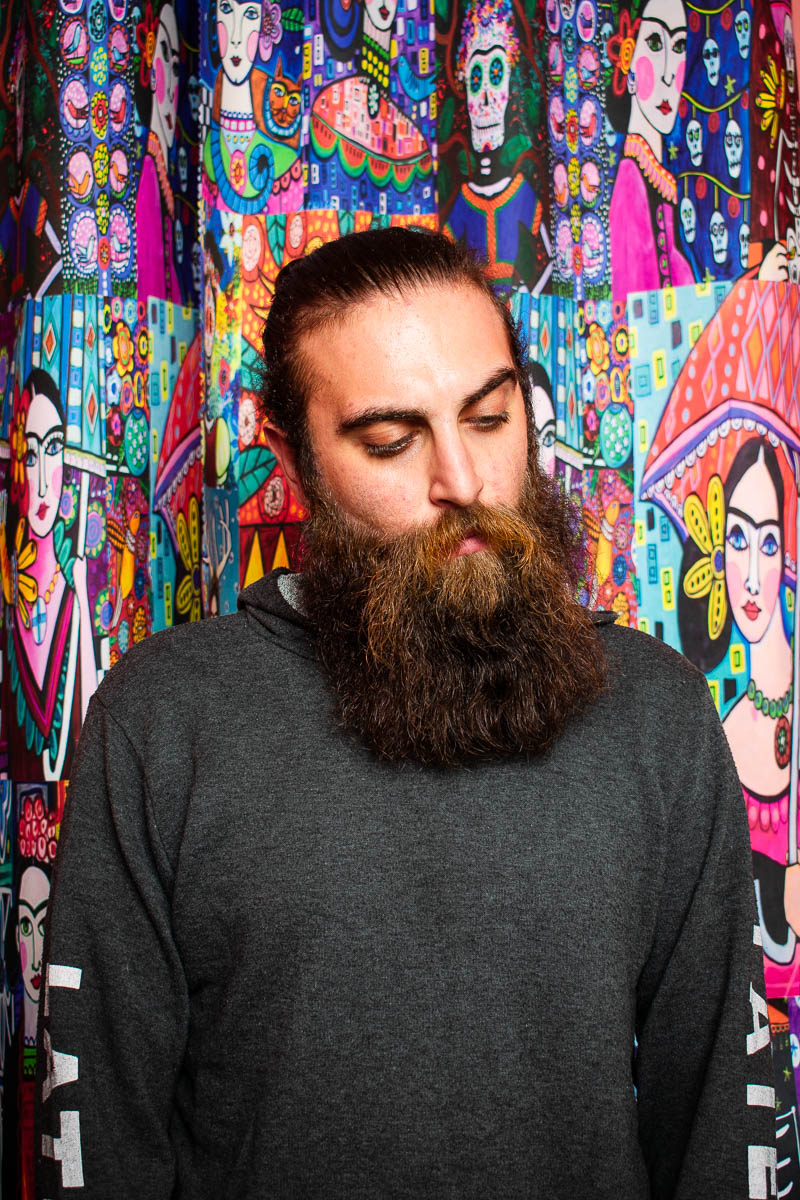
William Dauod
Pictures taken in:
From:
Nationality:
Photo and interview by:
“Everything about me is a dream. If you want me to tell you something that happened in the past two years or before, I won’t be able to recount it accurately because everything was happening suddenly, without plans. I was just living day by day.” William Dauod (29) fled Syria in 2017 after he refused to join the military and partake in Syria’s violent civil war. Before crossing into Turkey, the Syrian army detained William at the border multiple times, holding him at gunpoint and beating him. After William eventually settled in Turkey, a therapist helped him process his trauma and he discovered acting as a form of self-expression. “You can say that my upbringing, my life, and the stories I learned throughout my life are what made me survive.” Working as a barista at an art center, William drew on his sense of resiliency to expand his social circle while supporting his son as a single father. He dreams of developing his talents as an actor and living a peaceful life with his son.
Trigger Warning: Violence/ murder
full interview
Hello, I hope the audio is good. Before I introduce myself and tell you about the project I’m working on, you’re already my companion, so there’s no need for me to know about you. Would you like to mention your name?
No problem, yes.
You’re William Dawood?
Yes.
William Dawood, my dear friend. I’ll explain the project to you. It’s called “1000 Dreams,” for an organization called “Witness Change.” The idea of the project is that we will share a thousand stories with a photograph of the storyteller. We will conduct an interview and convert this recording into paragraphs. The stories will not be published with your voice or mine; instead, they will be published in written form.
Alright.
The project’s idea is that these thousand stories, which will be published through this project, will not be conducted by a journalist with a refugee or an expatriate. Instead, it will be done by an expatriate or refugee with another refugee. In this case, the interviewer understands the subject better because they will be from the same background. Hopefully, we’ll bring out stories that can be presented to a third party. If you complete this audio, you agree to have paragraphs from this audio published on any platform, whether National Geographic or Time Magazine. The same applies to the photos taken after the interview.
Alright.
Do you have any questions so far?
Not currently.
If you feel there’s any question you prefer not to answer, or if you don’t want to share your photo or name, you can refuse. If you need a break, we can take one. Feel free to act comfortably.
Okay.
My questions are divided into two parts: half about the present and half about the past. I’ll start with the present.
Okay.
The first question I’d like to ask is, who is William?
This is a difficult question, but I’ll try to answer it. William is many things. I’m not trying to exaggerate, but he’s a mix of the old William and the new William. He’s an ambitious young man who loves his work. I’ve been working as a barista for about 9 years now.
A barista?
Yes, a barista, and I struggle a lot with my name.
Your name, William, is a nice name.
I struggle with it a lot. People often assume I’m Christian because of my name, but I’m not. I don’t have a problem with being Christian.
By the way, the person who trained us and is a manager at Witness Change is named William.
Say hi to him for me haha. It’s been about 6 years since I’ve been in Istanbul, I am a single dad, I got married shortly after arriving here. I now have a little son named Jaiden. Currently, I’m approaching 30 years old, but I’m still trying to build my personality because it changed a lot during my departure from Syria.
How old are you now?
I’m 29 years old.
In which year did you leave Syria?
In 2017, and that’s another story that needs another recording.
We’ll come to that topic later. Where do you currently live?
Currently in the Fatih district in Istanbul.
How is the house?
It falls under the category of a youth residence, but it’s definitely not a typical one. We are 5 young men from the same area in Garamana. We live in the house, arranged it, and each person has their own room, so it’s not considered a typical youth residence.
Do you live with your friends?
Exactly, I live with my friends.
Do you face any annoyances from neighbors or friends in the house?
Never, I feel like I’m living in my own home, to the extent that I bring my son to sleep with me.
So, you’re comfortable in the house?
Very much.
How many friends do you live with?
4 people, and I’m the fifth.
So, you’re 5 people living in the house, and you’re comfortable with that?
Yes.
Is the house spacious?
It has 3 rooms and a living room. We live In the Yusef Pasha area.
So, the location is nice. You’re lucky with your house. How do you spend your time here? Do you work?
I have been working at Yolo Art Center for about 9 months.
What is Yolo Art Center?
Yolo Art Center is a cultural center, and I am one of its founders. I left for a while and worked elsewhere.
Could you explain more about Yolo Art Center?
Yolo Art Center is a cultural center that creates a safe space for young people to express themselves, whether through acting or singing.
Is it specifically for refugees?
Exactly. It mainly attracts refugees in Turkey who struggle to find a space where they can express their talents. You know our situation here in Turkey. Yolo Art Center can be considered a warm home, quite literally my second home. It’s where I spend most of my time. For the past 9 months, I have been actively working there, spending around 9 to 12 hours a day. You can say I spend my entire day at Yolo Art Center.
And do you work as a barista there?
Yes
This question is somewhat unrelated, but in the interviews I conduct with other refu, I notice that everyone around them is also a refugee. Are you the same?
Yes, I’ve tried to integrate into Turkish society. I won’t say I encountered rejection at all, but the idea is that since we first came here until now, all my work has been with Arabs. So naturally, my social circle is mostly Arab. Moreover, about 90% of the Arabs here, whether Syrian, Egyptian, or otherwise, are refugees.
Let’s get to the serious stuff. What are the things you enjoy?
I love music a lot.
What are your hobbies?
I love drawing, reading, and acting. I adore acting.
I think you are in the right place, combining culture with art. How has life been from when you left Syria until now? What were the challenging things and the sweet moments?
The most challenging things in life here were two: first, my name, and second, dealing with sectarian discrimination.
Your name?
My name is William Daoud.
Why is your name causing you a problem?
The Syrians here are strange; I haven’t seen anyone like them in Syria, to be honest. They thought I was a Christian. I don’t know what would be the problem if I was a Christian. I belong to the Druze sect, and this caused me a bigger problem.
You mentioned that the second issue you face is discrimination. What do you mean by sectarian discrimination?
It means being asked questions about your life that you’ve never heard before, such as, “What is your religion? What is your sect?” I had never been asked these questions in Syria. I’ve been asked these questions here, and during the month and a half I spent in Idlib. I was even imprisoned for 20 days because of this issue.
You were imprisoned in Idlib?
Yes, for twenty days because I’m Druze. I consider we are all equal, but we faced discrimination. They would say to us that we’re not from them, we can’t be like them, and we must become like them. So, I suffered a lot from this issue. Life was tough, to be honest.
In Turkey?
Yes, until I found a work and expanded my network.
What were the difficulties you faced?
Language, the language difference. By the way, socially, we don’t differ much from the Turks; if they speak Arabic, we will be as good as honey on pancakes. The difference is that two languages are social, like different Turks.
What about traditions?
The traditions are quite similar. I haven’t struggled much with the Turks, even more than I did with Syrians. Also, one difficulty is that the work hours are Turkish, not European.
What does Turkish work hours mean?
It means working for 12 hours.
So, there’s work pressure?
Exactly, it’s been a while since I became financially independent from my family. I worked a lot in Syria, and the longest shift I had was 8 hours, meaning a European shift. In Turkey, I started with a 12-hour shift, and recently, I managed to get a 9-hour shift. I struggled a lot until I built a large network, and then I reached what I wanted at work.
What are the nice things here?
In Turkey?
Since you came here.
The nicest thing since I came here is the freedom, complete freedom in everything. Because some people think that freedom is limited to a certain thing.
Do you mean freedom of expression?
Freedom in everything. You can go in and out whenever you want, wear anything you like. I’m talking about Turkey. The beautiful thing I experienced in Turkey is that everything is provided, regardless of work difficulties. But everything you want is available here. Turkey is a country suitable for both classes, whether you are poor or rich, you can live here.
Since your arrival and living here, how do you feel?
I feel a sense of emptiness, honestly, a significant emptiness. Regardless of having friends, in the end, we’re all refugees, and everyone is occupied with their lives. If you need someone, you won’t always find them because they’re busy. It’s not because they’re bad, but they’re busy with their lives. Additionally, I came out here alone, and my family is still in Syria, so I’m practically alone. All your time is spent at work, so you don’t have ample time to live your life, sit with friends, or be with family. I feel a considerable emptiness, honestly.
Did you leave your family and your home?
Yes, And I left my studies.
Did you leave your university?
I had one more year until graduation. I was studying surveying engineering, topography. I had to stop my studies because I was conscripted into the army, and I didn’t want to serve in the military.
We’ll get back to past stories, but we’re talking about the feelings and emptiness you’re experiencing. You left your family and everything. Do you currently feel a sense of belonging?
Belonging to what?
I mean, leaving your family is very difficult, and you also left the house you’ve lived in your whole life. These two things, a person has a strong connection to. So do you currently feel connected in some way?
Of course.
Do you feel connected to your family?
Yes, I feel connected to my family and to my country.
Connected to your country even though you’ve been far away for years?
Despite the distance and all the bad things that happened to me, my country is still my homeland.
How do you feel being far away from your family and homeland?
I don’t know
Do you miss them?
A lot, but I don’t know what the feeling is. It’s a difficult and new feeling. I still feel that it’s new.
Did you expect this to happen?
Not at all. I went to my university on a Thursday, and I found out that the army deferment was delayed for three days. I requested a paper to go to the army and found out that I had exhausted all my years of study. On Thursday, I went to the conscription department, and they told me that I had to join the army. On Saturday, I was in Idlib. Suddenly, I escaped; I didn’t expect this to happen to me.
Why were you in Idlib? To come here?
Of course, there was no other way. We had to come to Turkey because traveling to Lebanon was difficult, and to Jordan was even harder. So, I had no choice but to come to Turkey. It was a suitable solution to contact someone to arrange a smuggler for me to get to Idlib. I had to leave; there was no other option.
Why did you leave your country in the first place?
The primary goal was that I had to join the army because I was requested for military service.
Why didn’t you want to go for military service?
Because I didn’t want to kill the sons of my country. If there wasn’t anything specific, I would have definitely served my country.
Due to the war?
Of course.
Your enlistment was on Thursday, and by Saturday, you were in Idlib?
Yes.
You mentioned being detained in Idlib. Can you share the story?
From the moment I left Jaramana until I reached Idlib, I was on the verge of death about three times.The story is very long; are you willing to hear it?
Did you come to Idlib to eventually reach Turkey?
Exactly. I stopped at a checkpoint along the border strip, and they asked for my ID. They questioned if I was Christian, and I said no, I’m a Muslim. They asked if I came from Jaramana, and I said yes. They told me that this whole area is full of informants and officers, and they asked me to get out. They inquired about the Surah Al-Ikhlas from the Quran. I know it, but due to tension, I recited Surah Al-Fatiha. I realized that I was being drafted, and they sent me for a religious course.
This is because you weren’t a Quran memorizer?
Because I just stumbled over the verse even though I knew it. I know more Quran than they do.
Who were the people who stopped you?
The Free Syrian Army.
A faction from the various factions, right?
Yes.
How did this make you feel?
It made me regret being Syrian.
Did it make you feel betrayed?
Very much so because when you are with people, they should make you feel secure. These were supposed to be liberated areas. In the early days of the Syrian revolution, people were demanding freedom. These were the people calling for freedom. So, when I go out to them, and they ask me such a question, unrelated to my freedom or beliefs, I started questioning whether I am even in Syria. I wished I weren’t Syrian at that moment.
How did this make you feel at that time when they took you?
It was a feeling of fear. Before that, I thought my head would be chopped off. If you want, I can also tell you what happened to me with the Syrian army. When I arrived in Idlib, we were supposed to go to an area called Kharbat al-Joz on the border. It was nighttime, and the person who was supposed to take us suggested that we sleep at his place because the area was far. The plan was to spend the night there and then he would take us the next day. We agreed to that. When we went to his place, there was a checkpoint, and they asked for our IDs. I gave them my ID, the army service book, and the army deferment paper. They knew I was a university student. In Syria, any first-year university student in the first semester, even if he doesn’t have mandatory military service or even if he has completed it, is required to attend a closed course affiliated with the Baath Party. Everything in Syria happens forcibly. So, I went and completed the 15-day closed course. Like any person standing in a new place at a military checkpoint, I had a photo there, and I wasn’t carrying any weapons or standing on any front lines. These photos were old and erased anyway. The guy at the checkpoint asked for my phone, and I gave it to him. He searched my phone, and I have no idea how he recovered those photos. He asked me who was in the photo, and I told him it was me. He told me to get down, and they interrogated me, trying to find out if I was a soldier. Their whole approach was intimidation. They wanted to pull information from me, but I didn’t give them any results. I wasn’t afraid because I answered truthfully. After that, things escalated to the point where he pulled out his gun, fired a shot into the air, and placed the gun on my head.
It was an intimidation tactic. It’s called intimidation, not just fear. He placed the gun on my head with his hand on the trigger. My eyes were looking into his eyes, and there was only the pressure of the gun between me and death for a second. He told me to declare my testimony, so I grabbed his gun, looked at him, and said that I’d rather die as an innocent than die as a wrongdoer. I declared my testimony, placed the gun on my head, and all of this just for a photo. He didn’t inquire about anything else. When I told him that, he moved the gun away, released the safety, and his companion stood beside me, giving him a sickle, a tool used for harvesting. He told him that if I make a single move, he should cut my head off. Then he contacted a sheikh to get his opinion about me. The sheikh understood the story, why I had these photos, where I came from, and why I came here. If I were a soldier from the beginning, I wouldn’t have come to Idlib. Even if I had defected from the army, there would have been a convincing reason. I gave the sheikh my family’s phone number and told him to call them, informing them that their son is at his mercy, and they could kill me. I told him to Ask them why I left, and if he didn’t feel I’m truthful, he could kill me. After that, the prison story happened, and I also took a religious course.
What is your feeling at that moment when the weapon was placed on your head?
Very mixed feelings. You feel as if the entire tape of your life passes before your eyes in a second. I was scared, terrified, and regretful. New feelings I experienced.
Does this still affect you now?
Not now, but in the first year here, yes, it did affect me. I arrived here as a mental patient, and this was a shock for me.
Did this thing cause you trauma?
I was mentally ill, and I had about 4 sessions with the doctor to get out of this shock. Things reached a point where, when I was looking for work and saw someone who was a bit religious, I would hide my tattoos or change my name.
And this caused a shock for you?
literally.
The conversation intrigued me quite a bit.
The story is very long.
What is this thing that happened to you that makes you feel at this moment? Do you still feel regret?
Now, currently, no. The feeling is not the same as before. Previously, I used to tell this story a lot, and in the first period, the first year I came here, this story created something inside me, a sense of revenge.
A sense of revenge?
Yes, revenge. When the psychologist asked me after I finished the sessions, now that you’re doing well and you know where you are and what you’re doing, what are your wishes, and what would you like to do in Turkey? I told him I want to work, earn a lot of money, meet an arms dealer, buy a very large bomb, and throw it on Idlib. I tried 27 times to enter Turkey, stayed a month and a half in Idlib, and every time I tried to leave, they caught me, and I was beaten by the gendarmerie and sent back. In one of the attempts, they accused me of being Shia, and I slept in the mountains for 3 days because all of Idlib was searching for me, and they all wanted to cut my head off. After I paid $500 to the smuggler, they changed their minds about me, and they said I was a loved and good person, so I managed to get out.
Did you think you would survive when this happened to you?
Not at all. I was desperate.
Were you hopeless?
From the first incident that happened to me, I felt like I had my hand on my heart. Do you know the one who sleeps with one eye closed and one eye open? That’s how I spent that whole period.
Let’s change the topic a bit and talk about the positives. I want to talk about that specific period. What strengths did you have that allowed you to survive?
The first point is that I am Syrian, but from another perspective, I am one of those Syrians who are like a Chinese folding fan—no matter which side you flick it, it rings. I know everything, and I knew how to hide and save myself.
Why did you describe Syrians like that? Because of the war?
No, this description of Syrians is from before the war. I see that there is a war in Syria because we, the Syrians, are extraordinary. If you stop any Syrian guy and ask him about anything, he will understand everything. Syrians, wherever you throw them, can build a civilization if you want. You can say that my upbringing, my life, and the stories I learned throughout my life are what made me survive. I discovered this by myself, and this self-awareness helped me live here in Turkey.
Let’s go back to the question. What are the strengths that William possesses? It could be strengths you’ve had since childhood that helped you reach this point, and it could also be strengths you acquired through your experiences.
The first strength is complete self-reliance. I am a person who relies entirely on myself, and this has greatly helped me. The second point is that since my childhood, I don’t know if it’s a strength, but it helped me a lot—I love acting. I can mimic and play roles effectively.
Have you acted in everything you’ve faced?
Yes, because if one is questioned in such way, even if he were an angel and all this happened to him, he would admit that he did things, and he hadn’t actually done them at all. Did you understand the idea?
Due to pressure?
Exactly, but I knew how to frame the situation correctly and knew that I could survive this way.
When you came to Turkey, what did you intend to do or what was the plan, and how did you get here, now that you are in comfortable housing and a job you love?
Honestly, there was no plan. I left Syria suddenly and came to a country I didn’t know, didn’t know the language, and I didn’t even know that there were 4 million Syrians in Turkey. The only thing I knew was that here, I had a relative’s house to stay in. As for what I would do, whether I would continue to Europe or stay in Turkey, even the story of my marriage when I got married, had a child, and then got divorced—It’s all like a dream. Everything about me is a dream. If you want me to tell you something that happened in the past two years or before, I won’t be able to recount it accurately because everything was happening suddenly, without plans; I was just living day by day.
How did you end up here with this lack of planning or randomness? What factors led you to the area where you are now?
The first point is my work because, practically, the thing that brought us together, or even how I met you, was my job.
You’re a hardworking person.
I am not just hardworking; I simply love my work. I gave my work a lot of my time and effort more than my family. My work and my kind treatment led me to the social circle I have now. From two years ago until now, I can tell you about my plans and what I’m doing with my life. After my divorce, I knew how I would build my life. Before that, everything was vague, and you couldn’t plan to go to Europe because it required a large sum of money. You also couldn’t plan to start a business in Turkey due to the unpredictable situations involving immigrants and refugees, and life changes every day. Even from two years ago until now, life has been changing rapidly.
I want to ask you about your difficult memories here, but I noticed that this question is not as important compared to the memories you had before. So, I’ll ask another question, and when you answer, please answer it in the form of the question. I will ask you this question: Before the war, what was your dream? Before the war, my dream was to finish my studies. Before I started working with my degree, I had another dream. I am an old barman, so my dream was to open a café according to my taste.
If you completed your studies and opened a café to your liking, how would that make you feel?
That would make me feel passionate. What is passion? It’s having goals that you achieve, as I mentioned in the first sketch, to achieve your goals and then have the passion to pursue other dreams
Another question, as you left during a month and and a half period in Idlib after the war, what was your dream?
My dream, as I left Idlib, was to arrive safely.
If you arrived safely, how would that make you feel?
safe.
Currently, what is your dream?
Currently, my dream is to fulfill myself.
Tell us about self-fulfillment. ‘
Since I managed to plan and dream, I love anything I do, just like what I used to do in Syria before the war. Self-fulfillment is achieving the things and goals that William sees and can do.
So, what are your dreams?
First dream, I don’t want to say reaching stardom, but to become a skilled actor and contribute to this community.
Do you want a direction in the artistic field?
Certainly, the second dream, which I will maintain, is to start the café dream that I love. I no longer think about studying. The third dream is to spend a good, peaceful life with my son only, without caring about money, material things, or the country.
The story you lived, not only in Idlib but everything that happened to you, which is very difficult, has undoubtedly given birth to negative things, shocks, and also positive things. What experiences have you gained from this journey?
I will summarize everything with one answer. William left Syria at the age of 23 and is now 29 on paper, but William is currently 50 years old. I mean, I have the experience of a 50-year-old man in everything in life. First, due to the war, second, due to leaving Syria, and third, due to the rapid events that happened to me in Turkey. A lot of stories happened to me in Turkey, meaning an ordinary guy in Syria over 6 years does not do the same thing he did in Turkey.
The last question, and it’s the most important for me: Do you want to add something you feel should be present in the interview? Do you have any idea to add?
Yes, I hope this interview is seen by a director who likes this story and contacts me to make a film about a Syrian refugee who has suffered a lot in life.
Thank you for the addition.
Thank you. I love this kind of conversation when it’s calm and relaxing, and I want us to continue our talk together someday.
I got to know you more during the interview, and I learned stories I didn’t know before.
We’ve known each other for a year, but these stories I’m trying to forget, so I don’t like to talk about them too much.
Thank you, William, for your time and honesty. Your conversation was very real.
Many 1000 Dreams interviews were not conducted in English. Their translation has not always been performed by professional translators. Despite great efforts to ensure accuracy, there may be errors.